

In the high-stakes arena of decentralized finance, where billions flow through smart contracts without intermediaries, risk assessment remains a fragile linchpin. Traditional models falter under opacity; AI-driven predictions, while potent, demand verifiable inference to earn protocol trust. Enter a paradigm shift: integrating cryptographically proven AI outputs directly into DeFi for precise, tamper-proof risk signals. This fusion of decentralized inference DeFi and blockchain primitives promises to fortify lending pools, derivatives, and yield farms against hidden vulnerabilities.
Unpacking the Trust Chasm in DeFi Risk Dynamics
DeFi protocols grapple with asymmetric information. Lenders extend positions blind to subtle counterparty deteriorations, while borrowers face punitive liquidations from lagging oracles. The U. S. Treasury's 2023 assessment underscores illicit finance risks, urging robust AML/CFT layers. Yet, on-chain AI risk assessment evolves swiftly. Proof-of-Reserve feeds, as debated in Aave governance, verify asset backing, but fall short on predictive foresight. Verifiable AI bridges this gap, grounding sophisticated models in mathematical certainty rather than probabilistic faith.
Key Verifiable Inference Advances
- On-Chain Decentralized Learning: Decentralized framework for DeFi security using L2 compute, verified updates, and Proof-of-Improvement. arXiv Oct 2025
- VeriLLM Framework: Publicly verifiable decentralized LLM inference with low verification costs under one-honest-verifier assumption. arXiv Sep 2025
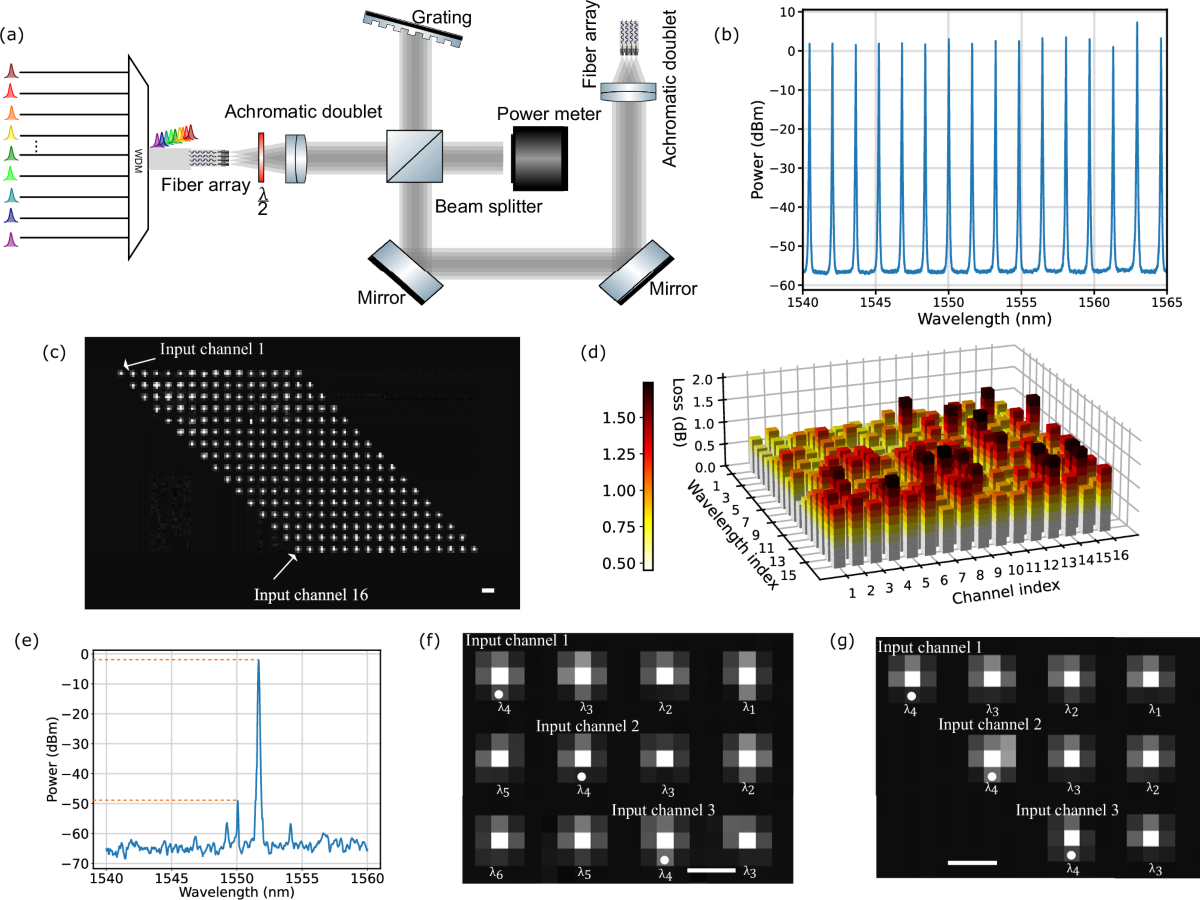
- Range-Arithmetic for DNNs: Efficient verifiable deep neural network inference via sum-check protocols and range proofs. arXiv May 2025
- Inference Labs ZK-VIN: Zero-Knowledge Verified Inference Network for cryptographically verified AI in DeFi, with Proof of Portfolio.
- Cysic-Inference Labs Partnership: Decentralized ASIC compute meets verifiable AI framework for scalable DeFi performance.
Consider the mechanics. Inference Labs' Proof of Portfolio exemplifies proof of inference DeFi, rendering AI-managed strategies transparent. Every allocation decision carries a zero-knowledge proof, attestable on-chain. This isn't mere auditing; it's embedding verifiability into the inference pipeline, slashing reliance on centralized custodians.
Inference Labs' ZK-VIN: Architectural Mastery for Modular Integration
Inference Labs pioneers with its Zero-Knowledge Verified Inference Network (ZK-VIN), a streamlined architecture prioritizing simplicity. Cryptographic proofs secure critical AI outputs, transforming blind trust into provable truth. Their collaboration with Cysic merges ASIC-powered compute with verifiable frameworks, tackling performance bottlenecks head-on. This duo addresses longstanding pain points: scalability without sacrificing security.
ZK-VIN's modularity shines for inference DeFi integration. Protocols can plug in verified signals for dynamic risk parameters, like collateral health scores or volatility forecasts. No longer do DeFi teams wrestle with bespoke verification; a standardized network delivers plug-and-play assurance. Early adopters eye autonomous capital markets, where AI-derived risk assessments self-adjust via on-chain oracles.
Fortifying Protocols: From Research to Real-World Deployment
Academic strides accelerate adoption. VeriLLM's lightweight verification under a one-honest-verifier assumption suits LLM-heavy DeFi apps, maintaining low costs. Range-Arithmetic converts neural nets into sum-check verifiable arithmetic, ideal for outsourced computations in lending protocols. Meanwhile, on-chain decentralized learning deploys Proof-of-Improvement, accepting only model updates that demonstrably bolster security against exploits.
These innovations position verifiable AI DeFi as imperative. Aave's PoR push signals market readiness; imagine extending it to predictive reserves via verified inference. Protocols gain alpha from holistic risk views: solvency proofs fused with AI foresight. My portfolio lens, honed over 16 years, spots medium-term trends here - yields from staking verifiable compute will outpace vanilla DeFi as trust premiums erode.
Staking positions in networks like Inference Labs' ZK-VIN offer yields that compound on cryptographic rigor, drawing capital from yield-chasers disillusioned by oracle failures and flash loan exploits. This isn't hype; it's a structural edge in decentralized inference DeFi, where verifiable compute becomes the new liquidity primitive.
Navigating Implementation Hurdles with Precision Engineering
Deploying on-chain AI risk assessment demands confronting compute intensity and proof overheads. Layer-2 scaling, as in the arXiv-proposed decentralized learning framework, offloads heavy lifting while anchoring updates on Layer-1. Proof-of-Improvement filters noise, ensuring only security-enhancing models propagate. VeriLLM complements this with LLM-tailored proofs, verifiable by a single honest party at minimal gas cost - a boon for real-time DeFi dashboards.
Comparison of Verifiable AI Inference Technologies for DeFi Risk Assessment
| Technology | Proof Generation Time | Gas Costs (est. L1 equiv.) | Verification Efficiency | DeFi Risk Assessment Applications |
|---|---|---|---|---|
| riLLM (VeriLLM) | 1-5s (lightweight algo) | 50k-200k | High (one-honest-verifier, low cost) | LLM inference for lending/AML risks 📈🔍 |
| Inference Labs' ZK-VIN | 10-30s (ZK-optimized) | 100k-500k (L2 scalable) | Very High (crypto proofs) | Proof of Portfolio, AI risk logic ⚡🔒💰 |
| Range-Arithmetic | 5-20s (arithmetic circuits) | 20k-100k | High (sum-check + range proofs) | DNN models for asset solvency 🧠📊 |
Range-Arithmetic pushes boundaries further, recasting deep learning ops into provable arithmetic circuits. Sum-checks and range proofs enable untrusted inference outsourcing, vital for protocols querying external models without custody risks. Yet, integration friction persists: smart contract size limits and verifier latency. Inference Labs sidesteps these via modular ZK-VIN, where proofs aggregate off-chain before on-chain settlement. Cysic's ASIC acceleration slashes inference times, making sub-second verifiability feasible even for complex risk models.
Picture a lending protocol adjusting LTV ratios dynamically. Verified inference feeds in borrower solvency scores, collateral volatility, and macroeconomic signals - all cryptographically attested. Liquidation thresholds adapt preemptively, cushioning black swan drawdowns. This elevates proof of inference DeFi from experiment to necessity, as U. S. Treasury warnings on illicit flows mandate auditable controls.
Portfolio Alpha in the Verifiable Era: Strategic Positioning
From my vantage managing hybrid portfolios, verifiable AI DeFi crystallizes medium-term alpha. Equities in compute providers pair with inference staking for diversified exposure. Inference Labs tokens, powering ZK-VIN, accrue fees from verification queries; Cysic's hardware yields hardware-backed returns. Risk-adjusted, these outstrip traditional DeFi as trust arbitrage fades.
Regulatory tailwinds amplify. Treasury's illicit finance assessment spotlights AML gaps; verifiable inference embeds compliance natively, turning liability into moat. Aave's PoR evolution hints at broader oracle upgrades - protocols first to fuse reserves with predictive AI will capture TVL inflows. Early movers like Inference Labs steer this tide, grounding autonomous markets in provable integrity.
Challenges remain: proof standardization and cross-chain composability. Yet, modular designs prevail. ZK-VIN's simplicity invites ecosystem convergence, much like Uniswap standardized AMMs. Developers gain tools; investors, yields; protocols, resilience. In this landscape, blind AI yields to verified precision, reshaping DeFi's risk frontier with unassailable truth.
Position accordingly: allocate to verifiable stacks, hedge with PoR-enhanced positions, and watch as inference DeFi integration redefines capital efficiency. The medium-term trend favors those who bet on proofs over promises.




No comments yet. Be the first to share your thoughts!