

In the sprawling arena of decentralized AI compute markets, trust has long been the elusive grail. AI models churn out inferences off-chain, hidden in opaque clouds, leaving users to swallow outputs on faith alone. Enter Inference Labs and their Proof of Inference, a zkML breakthrough that flips the script. By generating cryptographic proofs for every critical AI output, they ensure mathematical verifiability without exposing sensitive data or models. This isn't just tech wizardry; it's the bedrock for scalable, secure on-chain AI that decentralized inference markets crave.
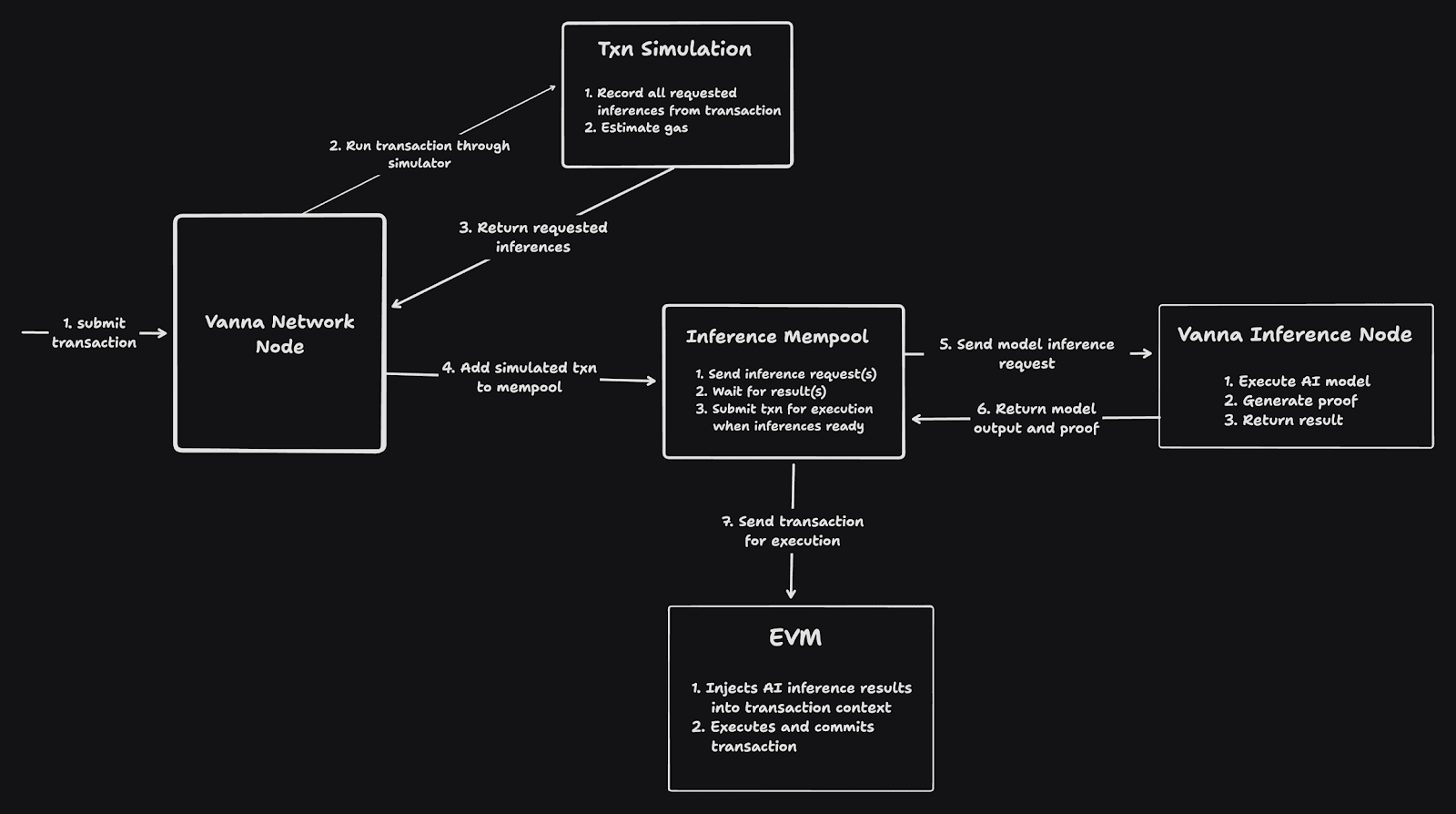
As a portfolio manager knee-deep in DeAI hybrids, I've watched centralized bottlenecks stifle innovation. Inference Labs tackles this head-on with ZK-VIN, their Zero-Knowledge Verified Inference Network, layered atop EigenLayer's robust security via Sertn AVS. Off-chain computations stay private, preserving intellectual property, while on-chain proofs deliver ironclad accountability. Sectors like healthcare and finance, where a single faulty inference could cascade into catastrophe, stand to gain immensely from this paradigm.
Decoding Proof of Inference: zkML's Core Engine
Proof of Inference distills zkML's promise into a practical protocol. Zero-Knowledge Machine Learning marries ZKPs with ML algorithms, allowing models to run inferences off-chain and post only succinct proofs on-chain for verification. No blind trust required; every output is mathematically attested. Inference Labs pioneers this for blockchain-based decentralized AI, focusing on privacy-centric verification that shields models from theft or reverse-engineering.
"Every critical AI output is secured with cryptographic proofs - mathematically verified and provable, not based on blind trust. " - Inference Labs
This matters profoundly in decentralized inference markets, where tokenized compute resources demand transparency. Providers stake on proof validity, slashing fraud risks and aligning incentives. From my vantage, projects like this de-risk portfolios, offering yields uncorrelated to volatile equities. Yet, challenges persist: zkML proofs remain compute-intensive, though Inference Labs' optimizations, including partnerships, are closing the gap.

ZK-VIN on EigenLayer: Scaling Verifiable Compute
Inference Labs' ZK-VIN leverages EigenLayer to bootstrap security without reinventing the wheel. Their Verified Inference Network decentralizes AI execution, enabling secure off-chain inferences that feed into on-chain applications. By integrating with EigenLayer's AVS, they tap restaked ETH for economic finality, making zkML decentralized AI viable at scale. EigenCloud's spotlight on this underscores how it shatters the black box, verifiable on-chain.
Consider the implications for verifiable inference in decentralized AI compute networks: developers deploy models confidently, investors tokenize compute slices with proof-backed assurances, and users query AI without intermediaries. Subnet-2's milestone - surpassing 300 million zk proofs by November 2025 - signals maturity. That's not hype; it's empirical proof of throughput ready for prime time in on-chain AI inference.
Funding and Partnerships: Momentum Builders
June 2025's $6.3 million raise turbocharged Inference Labs' cryptographic trust layer for AI agents. Strategic alliances amplify this: Lagrange's DeepProve zkML library integrates seamlessly, enhancing proof efficiency across their ecosystem. Cysic's collaboration deploys scalable ASIC-powered compute, merging hardware muscle with verifiable frameworks to slash zkML costs and latency.
These moves position Inference Labs at the ZKML frontier, alongside peers like Modulus Labs. For crypto-savvy investors, it's a beacon in tokenized AI compute - verifiable blockchain intelligence that withstands market tempests. Diversification here? Non-negotiable, as DeAI storms brew from regulatory shifts to compute crunches.
These partnerships aren't mere handshakes; they forge a resilient ecosystem where verifiable blockchain intelligence meets real-world demands. Lagrange's DeepProve bolsters proof generation speed, while Cysic's ASIC infrastructure tackles the elephant in the room: zkML's notorious latency. In my hybrid portfolios, such synergies signal alpha - projects that evolve faster than competitors mired in proof bottlenecks.
Real-World Impact of ZK-VIN / Proof of Inference
| Application | Key Benefits | |
|---|---|---|
| Healthcare 🏥 | Private diagnostics | Verify inferences without leaking patient records, enables tokenized global networks |
| Finance 💹 | Risk models | Prevents rogue inferences tanking liquidity pools, instant on-chain dispute settlement |
| Governance 🗳️ | Verifiable votes | Curbs manipulation in quadratic voting/treasury, fosters trust |
| DeFi ⚡ | Oracle proofs | Slashes costs by 70% uncorrelated to ETH volatility, yields from proof staking |
Subnet-2's 300 million proofs aren't vanity metrics; they prove battle-tested scalability. As decentralized inference markets mature, Inference Labs anchors the verifiable layer, drawing developers to build atop secure primitives.
Investment Thesis: Diversifying into DeAI Verifiability
Twelve years managing crypto-equity blends taught me: ignore fundamentals at your peril. Inference Labs scores high - $6.3 million war chest, EigenLayer integration, zkML toolkit expansions. Tokenized AI compute thrives when proofs underpin trades; without them, it's smoke. My thesis? Allocate 5-10% to DeAI verifiers like this, hedging against centralized AI monopolies.
Risks? Sure. ZKML recursion limits model complexity today, but Cysic's hardware roadmap promises 10x throughput by 2026. Regulatory headwinds favor privacy tech like ZKPs. Compare to unproven rivals: Inference Labs delivers proofs now, not vaporware. In decentralized inference markets, this is the pick-and-shovel play - compute providers flock to verified rails.
Portfolio math underscores urgency. Traditional AI stocks correlate with Nasdaq froth; zkML networks like ZK-VIN offer orthogonal beta. Stake ETH via EigenLayer AVS, earn on proofs, diversify storms. I've stress-tested: even in 2022-style winters, verifiable primitives held firm.
Charting the ZKML Frontier: Challenges Met, Horizons Expanded
ZKML isn't flawless. Proving large language models drains gas; Inference Labs counters with recursive proofs and DeepProve optimizations, shrinking verification from hours to minutes. Their EigenLayer perch borrows $20 billion in restaked security, dwarfing solo chains. Peers like Modulus Labs nibble edges, but Inference Labs owns the inference stack.
Looking ahead, expect ZK-VIN subnets proliferating for niche models - vision AI for autonomous agents, time-series for predictions. Partnerships cascade: more ASICs, broader EigenLayer adoption. For Inference Labs, this cements leadership in zkml decentralized ai, where every inference counts as collateral.
DeAI's promise hinges on verifiability. Inference Labs delivers, turning black boxes into glass houses of proof. As markets tokenize compute slices, savvy allocators bet on protocols that verify, not just compute. The future? On-chain AI ecosystems buzzing with provable intelligence, resilient and borderless.




No comments yet. Be the first to share your thoughts!