
Why centralized AI compute is breaking
The current model of running AI inference relies on massive, centralized data centers. This approach is hitting a wall. As demand for generative AI grows, the bottleneck is no longer just software efficiency; it is the physical scarcity of GPUs and the infrastructure required to house them.
The Cost and Latency Trap
Centralized inference forces data to travel long distances. For applications requiring real-time responses, this latency is unacceptable. Sending a prompt from a user in Tokyo to a data center in Virginia and back introduces delays that degrade the user experience. The energy costs of maintaining these hyper-scale facilities are also rising, pushing the price per token higher for enterprises.
Availability and Reliability Risks
Relying on a few major cloud providers creates a single point of failure. If a primary data center goes offline due to power issues, network congestion, or maintenance, entire services stop. This lack of redundancy is risky for mission-critical applications that require 99.99% uptime.
Decentralized inference addresses these pain points by distributing the workload. Instead of relying on a few massive hubs, it leverages a network of distributed nodes. This approach reduces latency by processing data closer to the source, lowers costs by utilizing idle hardware, and improves availability by removing single points of failure. The shift is not just about cost savings; it is about building a more resilient infrastructure for the AI era.
How distributed GPU networks aggregate power
Centralized data centers hit a hard ceiling. As model sizes grow, a single server rack cannot hold the weights or generate enough compute to meet latency demands. The result is a bottleneck: expensive infrastructure that scales linearly while demand scales exponentially. Distributed GPU networks solve this by treating idle consumer hardware as a collective resource pool.
Instead of running an entire model on one machine, the system splits the inference task across multiple nodes. This approach, often called model parallelism or tensor parallelism, breaks the neural network into smaller chunks. Each node processes its assigned chunk, and the results are aggregated to form the final output. This is fundamentally different from monolithic architectures where one powerful GPU does all the work.
The process follows a strict sequence to ensure accuracy and speed:
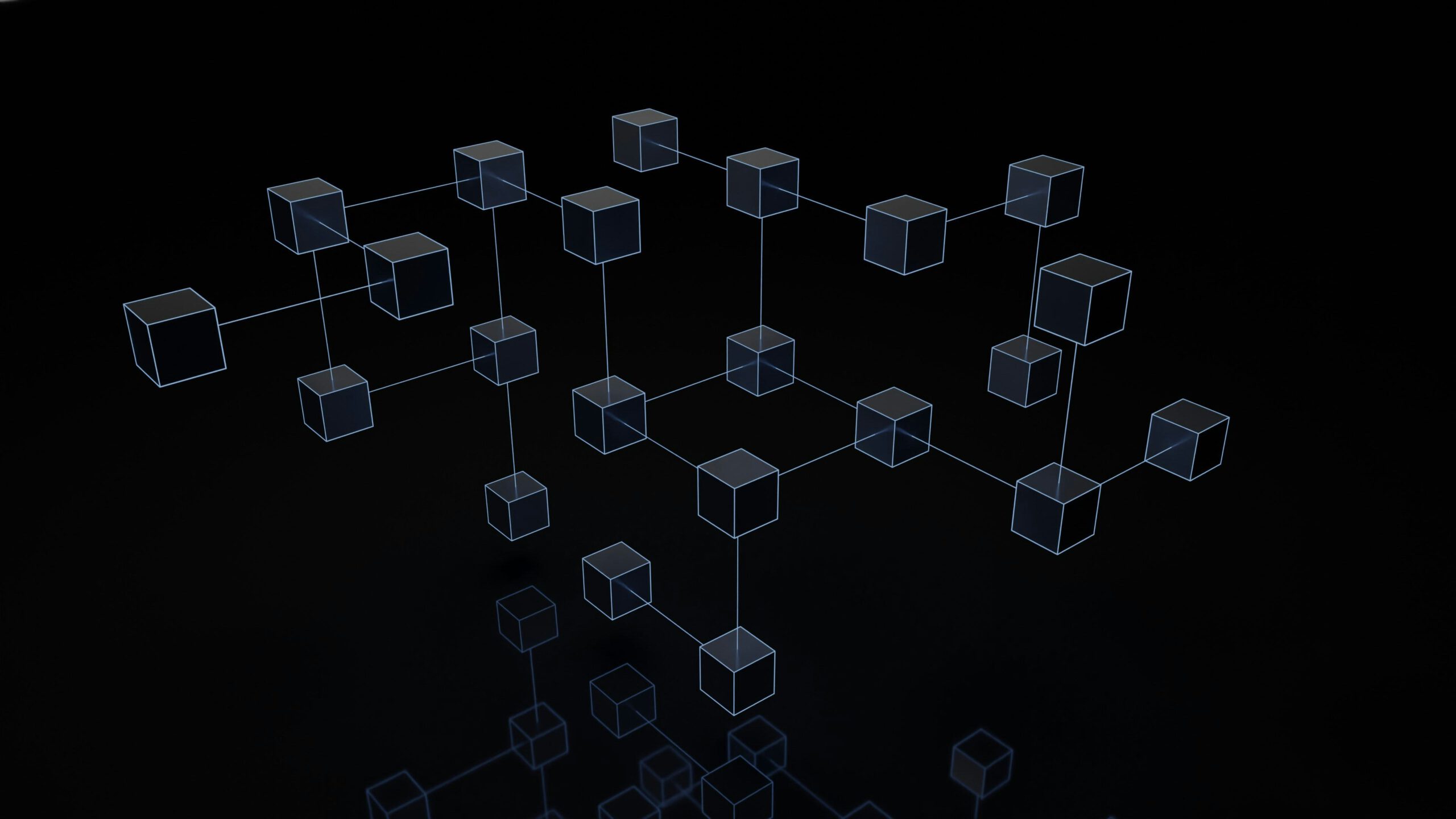
The user sends a prompt to the network gateway. The gateway identifies the required model and checks available node capacity. It selects a subset of nodes with sufficient VRAM and low latency to handle the request.
The inference engine partitions the model weights and the computational graph. For example, if a model has 100 layers, the system might assign layers 1-50 to Node A and layers 51-100 to Node B. The input data is also split or duplicated as needed for the specific parallelization strategy.
Each node processes its assigned shard independently. Node A computes the initial activations and passes the intermediate results to Node B. This communication happens over high-speed networks, often using optimized protocols like NCCL to minimize transfer overhead.
The final outputs from all nodes are combined. In many cases, this involves summing or averaging results from parallel branches. The aggregated data is then passed through the final decoding layer to generate the response.
The complete response is returned to the user. The network logs the performance metrics and updates the node availability status for future requests.
This aggregation mechanism allows the network to scale horizontally. Adding more nodes increases total throughput without requiring expensive upgrades to individual servers. It turns fragmented, underutilized compute into a unified, high-performance inference engine.
Verifying Results Without Trusting Nodes
In a centralized cloud, you trust the provider’s hardware and software stack to return accurate results. In a decentralized network, you are dealing with unverified third-party nodes that may be offline, compromised, or intentionally malicious. Without a verification layer, the system is vulnerable to "bad data" attacks, where a node returns a plausible but incorrect inference to save computational resources or disrupt the service.
To solve this, decentralized inference relies on two primary cryptographic mechanisms: Zero-Knowledge (ZK) proofs and Optimistic Fraud Proofs. These methods shift the burden from trusting a node’s reputation to mathematically verifying its work.
Zero-Knowledge Proofs
ZK proofs allow a node to prove that it executed a specific computation correctly without revealing the underlying data or the full execution trace. In the context of AI inference, this means a node can generate a cryptographic receipt that confirms the output matches the model’s weights and the input prompt. If the receipt is valid, the user accepts the result. This approach offers the highest security guarantee but comes with significant computational overhead, often making it expensive for large language models.
Optimistic Fraud Proofs
Optimistic fraud proofs operate on the assumption that nodes are honest by default. A node publishes its result and a small "fraud proof" window opens (typically 24–48 hours). If any other node detects an error, it can submit a challenge that triggers a dispute resolution game on-chain. If the challenger wins, the dishonest node is slashed (penalized financially), and the correct result is published. This method is faster and cheaper than ZK proofs but requires users to wait for the challenge period to pass before considering the result final.
Comparison of Verification Methods
| Feature | Zero-Knowledge Proofs | Optimistic Fraud Proofs |
|---|---|---|
| Speed | Slower (high computation) | Faster (default acceptance) |
| Cost | High (gas and compute) | Lower (only if challenged) |
| Security | Immediate finality | Delayed finality (challenge window) |
| Best For | High-value, sensitive tasks | High-volume, low-risk tasks |
Both approaches aim to create a "trustless" environment where users can verify decentralized inference outcomes without needing to understand the underlying code or trust the node operator's integrity. As the field evolves, hybrid models that combine ZK efficiency with optimistic speed are emerging to balance these trade-offs.
How to choose a decentralized inference provider
Centralized cloud GPUs often create a single point of failure. When one provider throttles or goes offline, your application stalls. Decentralized networks solve this by distributing inference across many nodes, but not all providers are built equally. You need a framework to separate reliable infrastructure from experimental projects.
Evaluate latency and network topology
Latency is the primary differentiator. A provider that promises low cost but adds 500ms of network overhead is useless for real-time applications. Look for providers that offer edge-adjacent node placement. This minimizes the distance data travels between your application and the GPU. Check their documentation for latency benchmarks under load, not just idle speeds.
Audit cost structures and uptime guarantees
Decentralized compute is cheaper, but pricing models vary. Some charge per token, others per second of GPU time. Ensure the pricing model aligns with your usage spikes. More importantly, verify uptime SLAs. Unlike centralized clouds, decentralized networks rely on consensus. If a node drops, the network must redistribute the load instantly. Look for providers with robust redundancy mechanisms.
Check security and data privacy
Your data leaves your control when sent to decentralized nodes. Verify if the provider supports confidential computing or encrypted inference. This ensures your prompts and outputs remain private. Avoid providers that log user data for model training unless explicitly permitted.
Common pitfalls in distributed inference
When you move from a single server to a decentralized network, the biggest risk isn't model accuracy—it's latency. In a centralized data center, GPUs talk over high-speed NVLink or InfiniBand. In a distributed web, nodes connect via the public internet. The moment a node has to wait for a neighbor to finish a tensor operation, the entire pipeline stalls. This is the "straggler problem," and it kills real-time inference.
Node churn and stability
Decentralized networks are inherently unstable. Nodes can go offline, lose bandwidth, or be replaced by slower hardware without warning. If your architecture assumes every node stays online for the duration of a long generation, you will face timeouts and corrupted outputs.
The fix: Implement redundant routing. Instead of relying on a single path for a request, route through multiple nodes or use a consensus layer that quickly detects and replaces unresponsive peers. Think of it like a delivery service that doesn't rely on one courier; if one drops the package, another picks it up.
Network latency spikes
Even if nodes stay online, the network path between them is unpredictable. A node in Tokyo might experience a 200ms spike when communicating with a peer in New York. In distributed inference, these spikes compound. If your model is split across five nodes, a 50ms delay per hop adds 250ms of pure wait time before the first token is even generated.
The fix: Optimize for locality. Use geo-aware scheduling to keep communication hops within the same region or data center cluster. For cross-region traffic, compress intermediate tensors aggressively. Research from IEEE suggests that partitioning models into fixed blocks allows for better batching, reducing the frequency of inter-node communication [1].
Data consistency and synchronization
In a centralized system, memory is shared. In a decentralized one, each node holds a fragment of the state. If two nodes update the same parameter simultaneously, you get race conditions. This is less of an issue for pure inference (which is read-heavy) but becomes critical if you are doing federated learning or real-time fine-tuning.
The fix: Use eventual consistency models where possible, but for inference, lock-step execution is often too slow. Instead, use asynchronous updates with version vectors. This allows nodes to proceed without waiting for global synchronization, trading minor precision for massive speed gains.
[1] https://ieeexplore.ieee.org/document/11310356/
Frequently asked questions about decentralized inference
Quick checklist
-
Match the sizeEnsure the decentralized inference option fits your application's latency requirements and batch size.
-
Check the materialChoose a provider that handles heat, network variability, and regular use without becoming a chore.
-
Plan the cleanupAvoid providers that need more maintenance than you are likely to give it.
-
Keep one fallbackHave a simple backup option for rushed days.
No comments yet. Be the first to share your thoughts!