
Why decentralized inference matters now
The global AI inference market is undergoing a structural shift driven by explosive demand and constrained supply. Valued at approximately $106 billion in 2025, the market is projected to reach $255 billion by 2030, expanding at a compound annual growth rate (CAGR) of 19.2%.
This growth is outpacing the availability of centralized GPU capacity. Hyperscalers face significant bottlenecks in securing advanced silicon, leading to extended wait times and rising costs for enterprise and developer access. The scarcity of centralized compute creates a pricing environment that is unsustainable for long-term, high-volume inference workloads.
Decentralized inference markets offer a solution by aggregating underutilized GPU capacity from distributed nodes. This model introduces liquidity to the compute market, allowing demand to be met by a broader, more elastic supply chain. For financial markets and high-stakes applications, this decentralization is not merely a technical alternative but an economic necessity to manage cost and latency risks.
The inflection point for 2026 lies in the convergence of this supply-demand gap with maturing on-chain settlement layers. As decentralized networks improve reliability and verification mechanisms, they become viable for production-grade inference, challenging the monopoly of centralized cloud providers.
The infrastructure layer: GPU scarcity and solutions
The primary bottleneck for the current AI cycle is not algorithmic efficiency, but physical hardware availability. Data center GPUs have been effectively sold out for months, creating a supply-demand imbalance that traditional cloud providers cannot resolve quickly enough. This scarcity is driving the cost of inference up, making centralized deployment economically inefficient for many workloads. The market recognizes this structural gap: the AI inference market is projected to grow from USD 106.15 billion in 2025 to USD 254.98 billion by 2030, with a CAGR of 19.2% (MarketsandMarkets). Simultaneously, the underlying GPU infrastructure itself is expected to expand from $10 billion in 2025 to $77 billion by 2035 (TechFlow Post).
Decentralized networks address this by aggregating idle or distributed GPU power into a unified, liquid pool. Platforms like Render and Akash act as marketplaces, connecting users who need compute with providers who have underutilized hardware. This model bypasses the lead times associated with building new data centers. By treating GPUs as a fungible commodity similar to electricity or bandwidth, these networks increase overall utilization rates and reduce the marginal cost of inference. The economic mechanics favor this approach when workloads are elastic or can tolerate slight latency variations in exchange for significant cost savings.
The market has already priced in this shift toward distributed compute. Decentralized infrastructure tokens have seen substantial volatility and growth, reflecting investor confidence in the long-term viability of this hardware arbitrage.
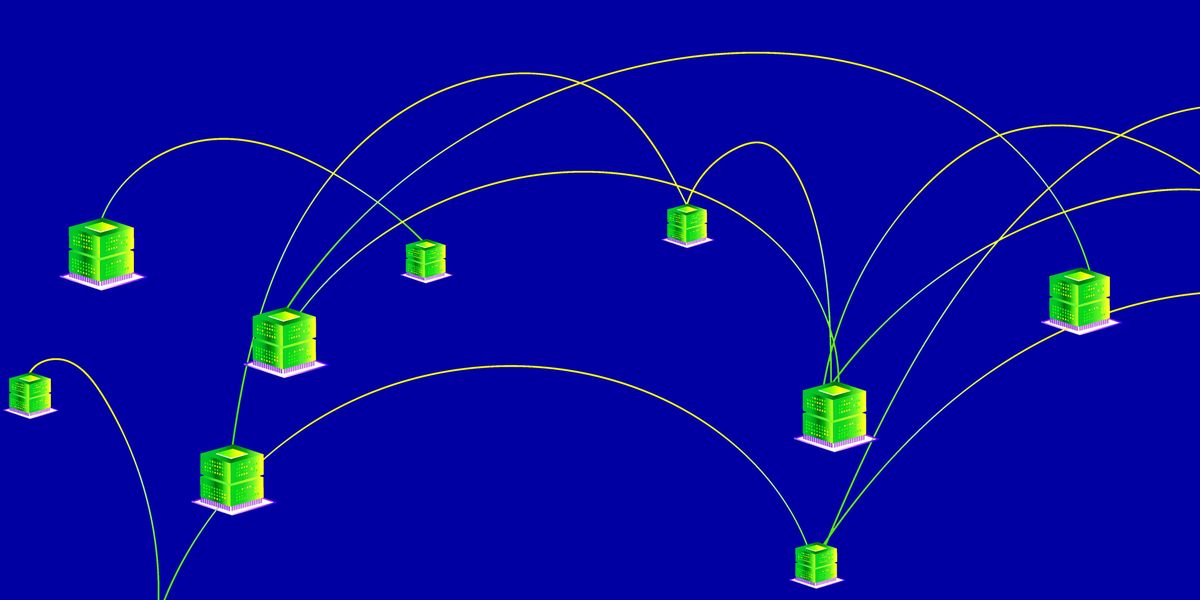
This aggregation model does more than just lower costs; it democratizes access to high-performance computing. Small-to-medium enterprises and individual developers can now access GPU power without the capital expenditure required for dedicated hardware. As the AI inference market continues its 19.2% CAGR trajectory, the ability to scale compute resources instantly via decentralized networks will likely become a standard operational requirement for any serious AI application.
Monetizing AI agent compute on-chain
The transition from human-driven queries to machine-to-machine (M2M) transactions is reshaping the economics of artificial intelligence. As AI agents proliferate, the demand for inference capacity is shifting from sporadic human requests to continuous, automated computational workloads. This structural change requires a payment infrastructure capable of handling high-frequency, low-value transactions without the friction of traditional banking rails.
Decentralized inference markets address this need through on-chain micropayments and smart contract execution. Unlike centralized cloud providers that bill monthly or by the hour, decentralized networks settle payments in real-time. An AI agent initiates a request, a node fulfills the computation, and a smart contract releases tokens instantly upon verification. This atomic settlement model eliminates counterparty risk and reduces overhead, making it economically viable to pay fractions of a cent for individual inference tasks.
The scale of this opportunity is anchored in broader market projections. The global AI inference market is expected to grow from USD 106.15 billion in 2025 to USD 254.98 billion by 2030, representing a 19.2% CAGR. Within this expanding landscape, decentralized compute segments are projected to capture a significant share, potentially reaching $10–15 billion by 2030 as GPU shortages persist. This growth is not merely speculative; it is driven by the tangible cost advantages of distributed networks over centralized monopolies.
To understand the economic displacement, consider the cost differential between traditional cloud inference and decentralized alternatives. The table below compares typical rates for similar compute tasks, highlighting the arbitrage opportunity that drives agent adoption.
| Provider Type | Cost per 1M Tokens (USD) | Settlement Model | Min. Transaction Value |
|---|---|---|---|
| Centralized Cloud | 0.01 - 0.10 | Monthly Invoice | $0.00 |
| Decentralized Market | 0.001 - 0.02 | Real-time On-chain | ~$0.01 |
This cost structure enables a new class of autonomous agents. Previously, the transaction fees associated with blockchain networks made micro-transactions impractical. However, Layer 2 solutions and specialized payment channels have reduced gas fees to negligible levels. Agents can now pay for inference, storage, and bandwidth in a single, continuous loop, creating a self-sustaining economy of digital labor. The result is a market where compute is treated as a utility, priced dynamically by supply and demand, rather than a static resource reserved for enterprise clients.
Market forecasts and investment implications
The financial outlook for decentralized inference markets is anchored by the explosive growth of the broader AI inference sector. According to MarketsandMarkets, the global AI inference market is projected to expand from $106.15 billion in 2025 to $254.98 billion by 2030, representing a compound annual growth rate (CAGR) of 19.2%. This rapid expansion is driven by the increasing demand for low-latency, real-time processing capabilities that centralized cloud providers struggle to deliver cost-effectively at scale.
Decentralized compute networks are positioned to capture a significant share of this growth by offering a more efficient alternative to traditional infrastructure. By leveraging idle GPU resources across distributed nodes, these platforms can reduce inference costs by 50–80% compared to major cloud providers. This economic advantage is critical for enterprises and developers who require high-volume processing without the premium pricing associated with centralized hyperscalers.
Investors should monitor the convergence of these two trends: the overall market expansion and the cost arbitrage of decentralized solutions. While the total addressable market is growing, the specific opportunity for decentralized inference lies in its ability to solve the bottleneck of compute scarcity. As AI models become more complex, the need for flexible, scalable, and affordable compute resources will only intensify, making decentralized markets a key component of the next AI infrastructure cycle.
Frequently asked questions about decentralized inference
What is the AI inference market forecast for 2030?
The AI inference market is projected to grow from USD 106.15 billion in 2025 to USD 254.98 billion by 2030, representing a compound annual growth rate (CAGR) of 19.2%. This expansion is driven by the increasing demand for real-time data processing and the shift from centralized cloud models to distributed networks. As latency becomes a critical constraint for enterprise applications, decentralized inference offers a scalable alternative to traditional infrastructure.
How do decentralized networks reduce inference costs?
Decentralized networks reduce costs by aggregating underutilized GPU capacity from distributed nodes, creating a more elastic supply chain. By treating GPUs as a fungible commodity, these platforms can lower inference costs by 50–80% compared to major cloud providers. This arbitrage is particularly effective for elastic workloads that can tolerate slight latency variations in exchange for significant savings.
No comments yet. Be the first to share your thoughts!