
The constraints of decentralized inference markets
Decentralized inference markets promise to democratize AI compute by breaking the monopoly of centralized cloud providers. Instead of relying on a single vendor, these platforms distribute model inference across a global network of nodes. This structure theoretically lowers costs and increases resilience, but it introduces significant engineering challenges that separate theoretical potential from practical utility.
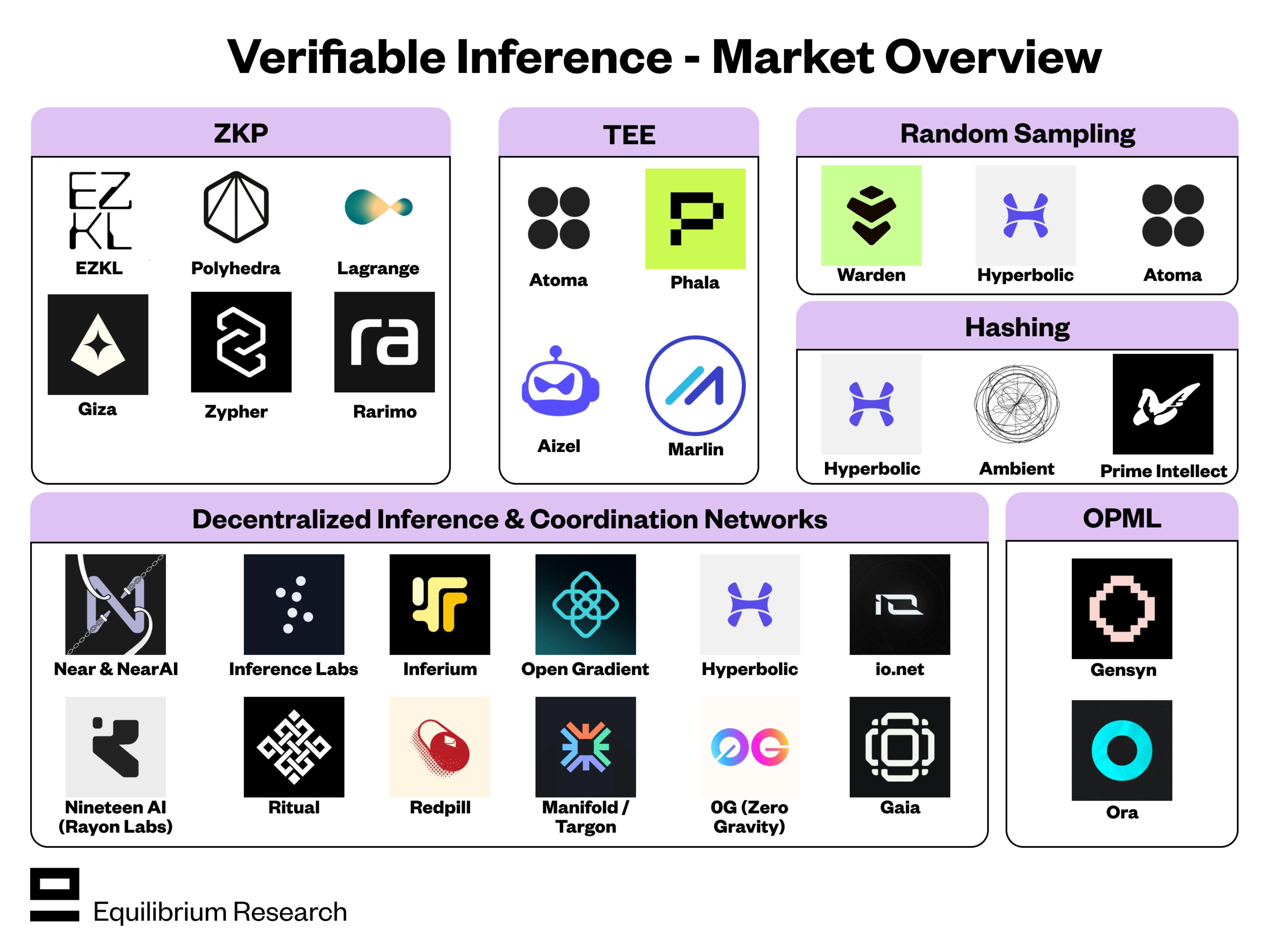
The core tension lies in verifiability. In a centralized environment, trust is established through brand reputation and service level agreements. In decentralized networks, you must mathematically prove that a node executed the correct computation without re-running the entire model yourself. Currently, three primary approaches address this: zero-knowledge proofs, optimistic fraud proofs, and cryptoeconomic staking. Each method trades off between computational overhead, latency, and economic security.
Zero-knowledge proofs offer the highest level of verification but remain computationally expensive for large language models, making them impractical for high-throughput inference today. Optimistic fraud proofs allow computations to proceed quickly, assuming honesty until a challenger proves otherwise, but they introduce latency during dispute resolution. Cryptoeconomic models rely on financial stakes to deter misbehavior, which is efficient but exposes the system to economic attacks if the staked value is insufficient.
For developers evaluating these markets, the choice is not just about price. It is about tolerance for latency and the complexity of integrating verification layers. While the infrastructure is maturing, most production workloads still require a hybrid approach, balancing decentralized efficiency with centralized reliability for critical tasks. The market is currently in a proof-of-concept phase, where the primary constraint is not demand, but the ability to guarantee output correctness at scale.
Evaluating tradeoffs in decentralized inference markets
Decentralized inference markets promise lower costs and censorship resistance, but they introduce friction that centralized cloud providers do not have. Before committing to a network, you need to weigh three concrete factors: how the system proves computation was done correctly, the latency of the network, and the reliability of the node operators.
Verification methods and fraud proofs
The core challenge is ensuring a node actually ran the model and didn't just return a random answer. Dragonfly Research outlines three main approaches: zero-knowledge proofs, optimistic fraud proofs, and cryptoeconomics. Zero-knowledge proofs offer strong security but add significant computational overhead. Optimistic fraud proofs are faster but rely on a window of time for challengers to detect errors. You must decide if the security guarantee is worth the added latency or cost for your specific use case.
Latency and node availability
Centralized data centers optimize for speed. Decentralized networks are inherently slower because they must coordinate across many independent nodes. This latency varies wildly depending on the network's congestion and the geographic distribution of its providers. For real-time applications like chatbots, a 2-second delay is often unacceptable. For background tasks like batch processing or fine-tuning, this delay is negligible. Check the network's current uptime and average response times before integrating.
Economic incentives and token stability
Most decentralized inference markets use tokens to pay for compute. This introduces volatility risk. If the token price drops, node operators may stop providing services, leading to network instability. Conversely, if the price spikes, your compute costs can become unpredictable. Some networks use stablecoins to mitigate this, but liquidity can still be an issue. Evaluate the tokenomics of the network to understand how it sustains node participation during market downturns.
| Factor | Centralized Cloud | Decentralized Market |
|---|---|---|
Choose the next step
2026 guide: How Decentralized Inference Markets Are Democratizing AI Compute works best as a clear sequence: define the constraint, compare the realistic options, test the tradeoff, and choose the path with the fewest hidden costs. That order keeps the advice usable instead of decorative. After each step, pause long enough to check whether the recommendation still fits the reader's actual situation. If it depends on perfect timing, unusual access, or a best-case budget, include a simpler fallback.
Spotting Weak Options in Decentralized Inference
Decentralized inference markets promise cheaper AI compute, but the infrastructure is still maturing. Many projects overstate their capabilities or use vague terminology that masks significant trade-offs. To avoid wasting resources, you need to separate marketing hype from technical reality.
Misleading Claims and Verification Methods
Some platforms claim "trustless" verification using zero-knowledge proofs, but the computational overhead often negates any cost savings. As noted in recent research, true verifiable inference is complex and rarely matches the simplicity of the pitch [src-2]. Always check if the verification method is actually implemented or just a whitepaper concept.
Common Mistakes in Provider Selection
A frequent error is choosing a provider based solely on price without auditing their node reliability. Decentralized networks can suffer from latency spikes or node dropout, which breaks real-time inference. Look for projects with transparent, on-chain performance metrics rather than relying on anecdotal success stories.
The Prediction Market Confusion
Don't confuse inference markets with prediction markets. While both use blockchain, prediction markets focus on forecasting outcomes, not running AI models [src-serp-1]. Ensure you're evaluating the right infrastructure for your specific compute needs.
Decentralized inference markets: what to check next
Before committing compute or capital, it helps to separate the infrastructure promise from the market mechanics. Decentralized inference relies on token-coordinated networks like Akash, io.net, and Nosana to route requests to idle GPU resources. While this lowers costs compared to centralized clouds, it introduces new variables in reliability and verification.
The following questions address the most common practical objections regarding cost, speed, and security in these emerging markets.
No comments yet. Be the first to share your thoughts!