
Get decentralized inference 2026 right
Use this section to make the The Decentralized Inference Boom decision easier to compare in real life, not just on paper. Start with the reader's actual constraint, then separate must-have requirements from details that are merely nice to have. A practical choice should survive normal use, maintenance, timing, and budget. If a recommendation only works in an ideal situation, call that out plainly and give the reader a fallback path.
The simplest way to use this section is to write down the must-have criteria first, then compare each option against those criteria before weighing nice-to-have features.
Work through the steps
The Decentralized Inference Boom works best as a clear sequence: define the constraint, compare the realistic options, test the tradeoff, and choose the path with the fewest hidden costs. That order keeps the advice usable instead of decorative. After each step, pause long enough to check whether the recommendation still fits the reader's actual situation. If it depends on perfect timing, unusual access, or a best-case budget, include a simpler fallback.
Fix common mistakes in decentralized inference
Running AI inference on distributed networks introduces friction points that centralized cloud providers don’t have. The most common error is ignoring latency. When your model is split across nodes in different regions, the time it takes for data to hop between them can make real-time agents unusable. Always map your node topology before deploying. If your agent needs sub-second responses, stick to a single region or use edge caching.
Another frequent mistake is underestimating network reliability. Unlike a data center, individual nodes in a decentralized market can go offline unexpectedly. Your code must handle retries and fallbacks gracefully. If one node fails, the system should automatically route the request to the next available GPU without dropping the user’s session. Hard-coding endpoints or assuming 100% uptime is a recipe for failure.
Finally, don’t overlook the cost of data transfer. Moving large model weights or intermediate tensors across a peer-to-peer network can be expensive and slow. Optimize your data pipeline by quantizing models where possible and minimizing the payload size. This isn’t just about saving money; it’s about keeping the inference loop tight enough for agents to operate effectively.
Decentralized inference 2026: what to check next
Before committing to distributed compute, it helps to separate the hype from the actual economics. The market is shifting. By 2026, roughly 70% of GPU demand will come from inference rather than training, driven by the need for cheaper, scalable options [[src-serp-1]]. Here are the practical answers to the most common questions.
Is decentralized AI the future?
It is becoming the standard for cost-sensitive workloads. Decentralized networks claim up to 50% lower costs compared to traditional cloud providers [[src-serp-5]]. While centralized clouds still dominate high-end training, distributed inference is proving its value in latency-sensitive and budget-constrained environments.
How does distributed inference actually work?
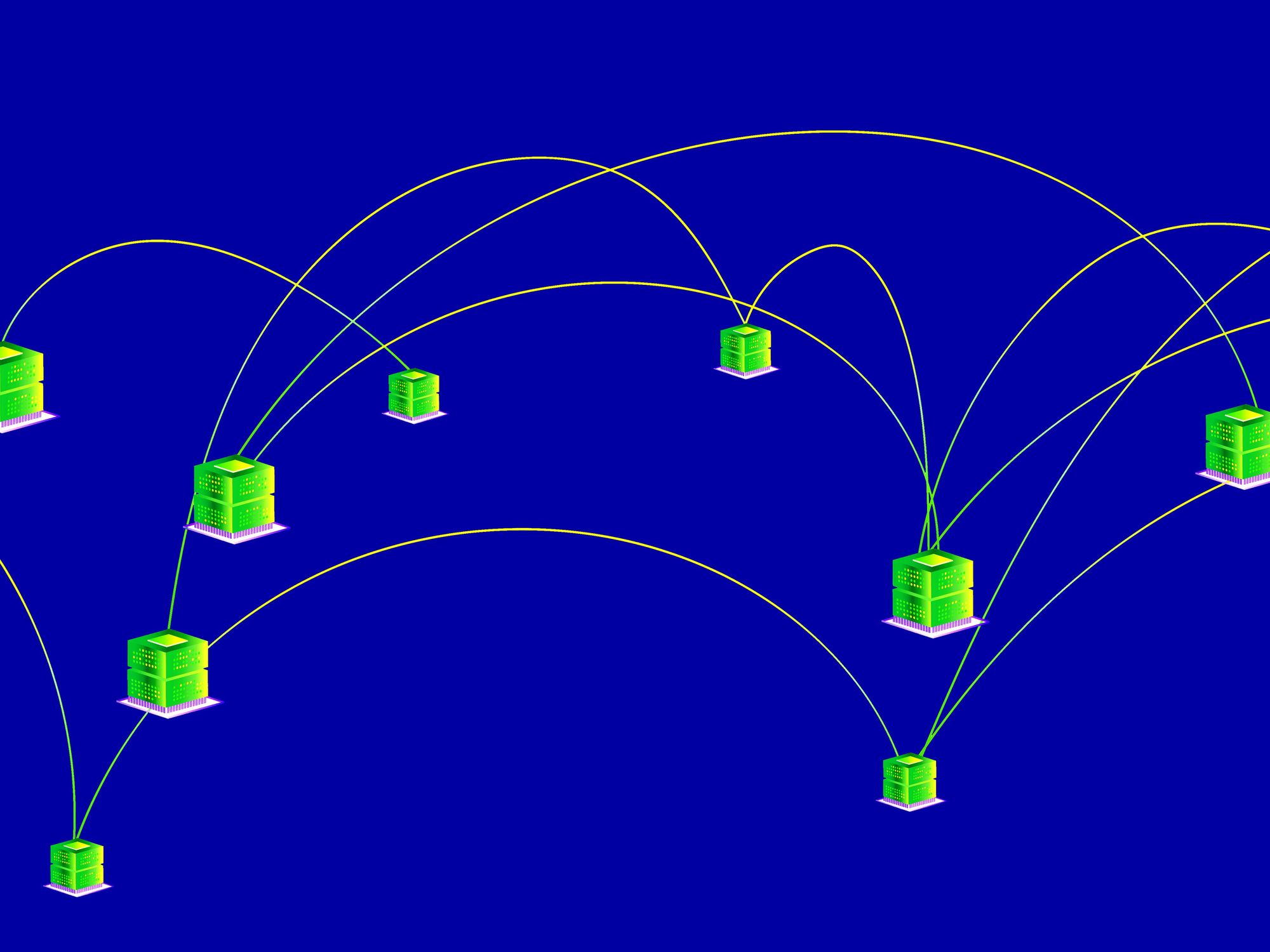
Instead of running a model on one massive server, the system partitions the neural network into fixed blocks of layers [[src-serp-3]]. These blocks are distributed across a global network of nodes. When you send a request, the data flows through the chain of nodes, each processing a piece of the model before passing it on.
Is it safe and reliable?
Reliability has improved with new verification frameworks. Tools like VeriLLM allow for publicly verifiable outputs, ensuring that the result from a random node is correct without needing to re-run the entire calculation [[src-serp-6]]. This transparency reduces the risk of silent errors common in early distributed systems.
What are the main drawbacks?
The primary trade-off is latency. Because data hops between multiple nodes, inference can be slower than a dedicated local GPU. It is also less suitable for real-time applications requiring millisecond responses. However, for batch processing, fine-tuning, or non-interactive AI agents, the savings often outweigh the slight delay.
No comments yet. Be the first to share your thoughts!