
Split large models into smaller shards
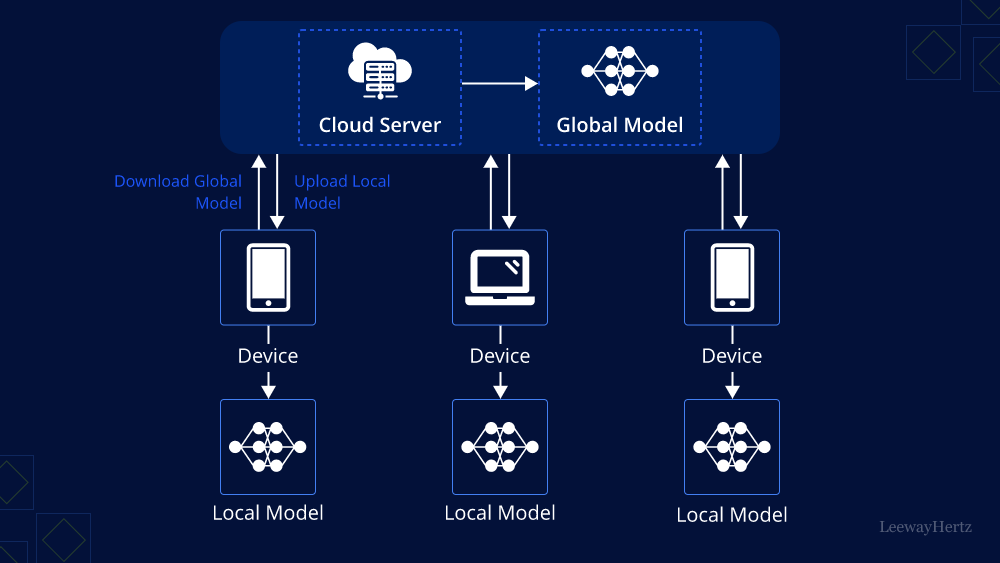
Decentralized inference relies on model parallelism to distribute the computational load of large language models across a heterogeneous network. Instead of requiring a single, expensive GPU to hold the entire model in memory, the model is partitioned into smaller, independent fragments called shards. These shards are then assigned to different nodes within the mesh, allowing the system to leverage the combined memory and processing power of multiple devices.
This partitioning strategy is fundamental to overcoming the hardware barriers that typically restrict AI deployment. By breaking a monolithic model into fixed blocks of layers, the system can match specific shards to the available resources on each node. This approach not only reduces the entry cost for high-end hardware but also improves fault tolerance; if one node fails, the remaining shards can often continue processing or trigger a re-sharding event.
The process involves dividing the neural network's weights and activations so that data flows sequentially or in parallel through the distributed nodes. Each node processes its assigned slice of the model and passes the intermediate results to the next node in the chain. This sharding mechanism ensures that the inference task remains efficient and scalable, transforming a cluster of modest devices into a powerful, unified computing resource.
Connect nodes via a distributed mesh
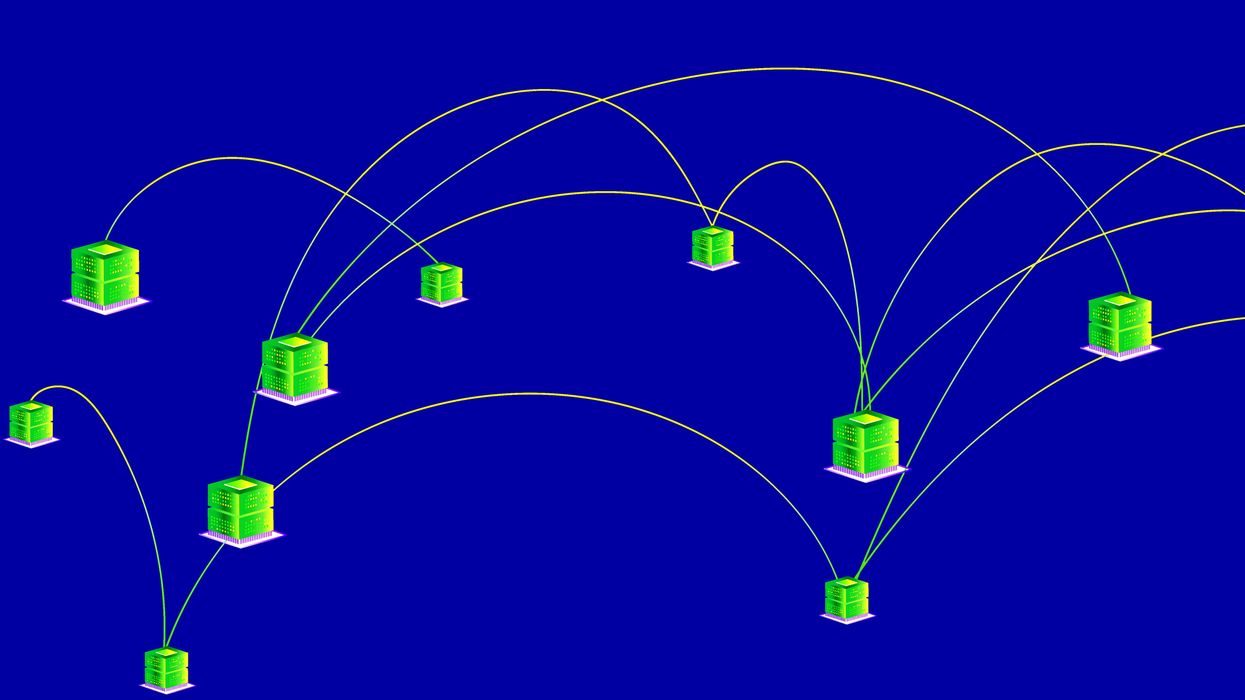
A decentralized inference pipeline requires a network architecture that treats the public internet not as a failure point, but as the primary transport layer. Unlike centralized clusters where nodes share a low-latency internal network, a distributed mesh must handle high latency and heterogeneous device capabilities across untrusted connections. This architecture shifts execution from rigid data centers to a flexible network of local devices, requiring robust protocols for discovery, communication, and state synchronization.
The foundation of this mesh is a peer-to-peer overlay network. Instead of a central orchestrator dictating tasks, nodes discover each other through a distributed hash table (DHT) or a gossip protocol. Each node advertises its available resources—such as GPU memory, compute cycles, and bandwidth—and maintains a dynamic view of its neighbors. This decentralized discovery ensures that the system remains resilient; if a node drops offline or its network connection degrades, the mesh automatically reroutes inference requests through alternative paths without a single point of failure.
To manage the chaos of public internet traffic, the mesh employs a layered routing strategy. High-priority inference tasks are routed through nodes with verified low-latency connections, while batch jobs or non-urgent computations are assigned to nodes with higher latency but available capacity. This tiered approach maximizes resource utilization while maintaining acceptable response times for interactive applications. The network layer must also handle packet loss and jitter, often by fragmenting requests into smaller chunks that can be reassembled by the aggregator node.
Security in this environment is paramount. Since nodes are untrusted, the mesh relies on zero-knowledge proofs (ZKPs) to verify computation without revealing the underlying data or model weights. Each node returns a cryptographic proof alongside its inference result, allowing the aggregator to validate the correctness of the computation before accepting it. This ensures data privacy and computational integrity, even when the underlying hardware is owned by unknown third parties.
{
  "network": {
    "protocol": "libp2p",
    "discovery": "kademlia-dht",
    "transport": "tcp-tls",
    "encryption": "noise-protocol",
    "routing": {
      "strategy": "latency-aware-gossip",
      "max_hops": 5,
      "retry_policy": "exponential-backoff"
    }
  },
  "node_capabilities": {
    "gpu_memory_gb": 16,
    "compute_flops_t": 0.5,
    "bandwidth_mbps": 100,
    "latency_ms": 45
  }
}
Verify outputs with zero-knowledge proofs
To ensure the integrity of computations performed by untrusted nodes, you must integrate zero-knowledge proofs (ZKPs) into your inference pipeline. This cryptographic method allows a node to prove that it executed a specific model inference correctly without revealing the underlying data or the full computational trace. Unlike traditional verification, which requires re-running the expensive computation, ZKPs provide a succinct proof that can be verified quickly by any participant in the network.
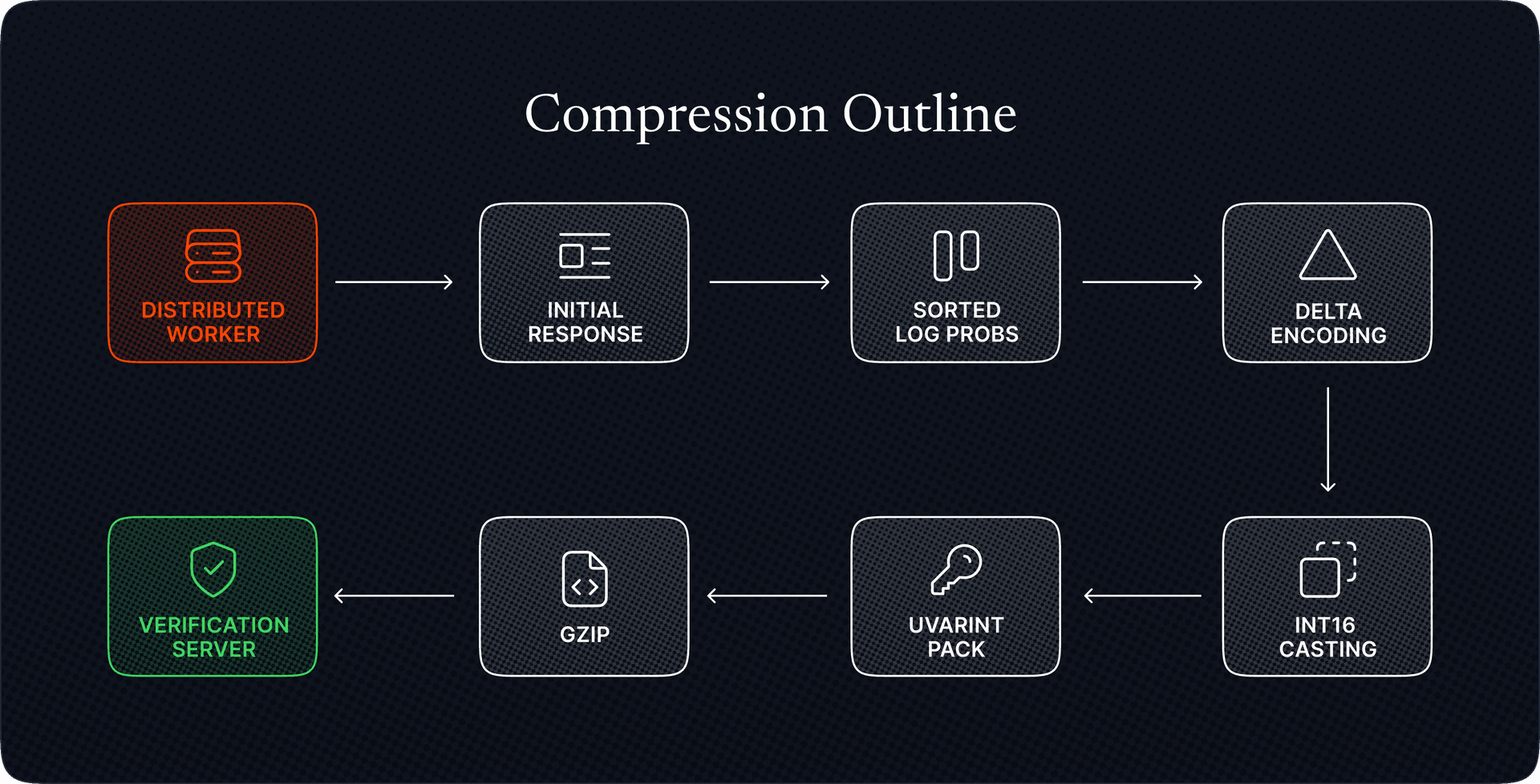
The core challenge in decentralized inference is the computational overhead of generating these proofs for large language models. Current frameworks, such as those discussed in recent research on publicly verifiable decentralized inference, focus on lightweight architectures that minimize this burden. You typically achieve this by sharding the inference task or using a mesh of nodes where each handles a subset of the computation. The final step involves aggregating these partial proofs into a single verifiable statement.
When implementing this layer, you have three primary approaches to consider: zero-knowledge proofs, optimistic fraud proofs, and cryptoeconomic staking. For high-assurance environments, ZKPs are the standard because they offer immediate, mathematical certainty of correctness. Optimistic fraud proofs, by contrast, assume validity by default and only verify when challenged, which reduces latency but increases the window for potential exploits. Choose the approach that aligns with your latency requirements and trust assumptions.
To build this effectively, start by selecting a ZK-circuit compatible with your target model architecture. Popular choices include zkLLM and similar frameworks that support efficient proof generation for transformer-based models. Ensure your node software can generate and submit these proofs alongside the inference result. This creates a transparent, auditable trail where any verifier can confirm the output's validity without needing to trust the specific node that produced it.
Deploy the inference engine to production
Building a decentralized inference pipeline requires assembling discrete components into a cohesive mesh. The goal is to split large language models into smaller shards, distribute them across nodes, and verify outputs using zero-knowledge proofs. This section walks through the concrete steps to get a functional node online.
Initialize the runtime environment by installing the necessary dependencies for the inference framework. Ensure your node has sufficient GPU memory to handle the assigned model shards. Configure the network interface to allow inbound connections from other peers in the mesh.
Define how the model weights will be partitioned. Use the configuration file to specify the sharding strategy, ensuring each node receives a manageable portion of the total parameters. This step is critical for balancing load across the decentralized network and preventing any single node from becoming a bottleneck.
Connect your node to the decentralized network. This involves registering with the discovery service and establishing peer-to-peer connections with other nodes. Verify that the handshake protocol is successful by checking the node status logs for active peers and stable latency metrics.

Download the assigned model shards and load them into memory. Use zero-knowledge proofs to verify the integrity of the loaded weights without exposing the full model architecture. This ensures that the computations performed by your node are trustworthy and have not been tampered with during transmission.
Start the inference engine and begin processing requests. Monitor the node’s performance metrics, such as throughput and error rates, to ensure stable operation. Adjust the resource allocation if necessary to maintain optimal performance within the decentralized mesh.
Checklist for decentralized inference readiness
Before deploying your distributed AI service, ensure the underlying infrastructure supports the unique demands of sharding, mesh networking, and zero-knowledge proofs. This checklist verifies that your nodes are ready to handle fragmented inference workloads without compromising latency or security.
-
GPU Availability: Confirm each node has sufficient VRAM for its assigned model shard. Fragmented models require precise memory allocation to prevent OOM errors during inference.
-
Network Latency: Measure round-trip time between mesh nodes. High latency disrupts the synchronous communication required for layer-wise sharding; aim for sub-10ms internal links.
-
Cryptographic Keys: Verify that all nodes possess valid keys for zero-knowledge proof generation. Invalid signatures will cause the verification layer to reject valid inferences.
-
Model Partitioning: Ensure the model is correctly split into fixed blocks of layers. Incorrect partitioning breaks the data flow between sharded nodes.
-
Fault Tolerance: Test node failover mechanisms. The system must seamlessly redistribute shards if a node drops from the mesh.
-
GPU memory aligned with shard size
-
Mesh latency under 10ms
-
ZKP keys verified and rotated
-
Model blocks partitioned correctly
-
Failover testing passed
Common questions about distributed AI
When architecting a decentralized inference pipeline, engineers often encounter friction points that differ significantly from centralized cloud deployments. The following clarifications address the primary technical concerns regarding cost efficiency, network latency, and data privacy.
No comments yet. Be the first to share your thoughts!