
The 2026 compute bottleneck
The demand for AI inference is outpacing the supply of high-end hardware, creating a structural deficit that centralized cloud providers are struggling to bridge. In 2025, the AI inference market was valued at $103 billion and is projected to surge to $255 billion by 2030, growing at a compound annual rate that strains existing data center capacities [[src-serp-7]]. This exponential growth is not just about model size; it is about the real-time latency requirements of autonomous agents and enterprise applications that centralized hubs simply cannot serve efficiently at scale.
Centralized infrastructure faces a hard ceiling. Building new data centers takes years, and the energy constraints of major tech hubs limit immediate expansion. Meanwhile, the cost of running inference on proprietary clouds remains high, squeezing margins for developers and enterprises. The gap between available compute and required throughput is widening, turning compute scarcity into a primary bottleneck for AI adoption in 2026.
Decentralized inference markets emerge as the logical solution to this bottleneck. By aggregating idle GPU capacity from a global network of providers, these markets bypass the geographic and infrastructural limitations of traditional cloud providers. They offer a way to access compute that is both more abundant and more cost-effective, directly addressing the supply-side constraints that are currently throttling the industry.
How decentralized inference networks operate
Decentralized inference markets solve the 2026 AI compute shortage by aggregating idle GPUs into a unified layer. Instead of relying on centralized cloud providers, these networks coordinate thousands of dispersed machines to handle model inference tasks. This approach turns fragmented hardware into a scalable, on-demand resource pool.
The mechanism relies on token-coordinated markets to match supply with demand. Projects like io.net, Akash, Render, Aethir, and Nosana have built these infrastructures for years. They use cryptoeconomic frameworks to mediate inference processes, ensuring that requests are routed to available nodes efficiently. Tokens serve as both the incentive for providers and the settlement layer for transactions, creating a self-regulating ecosystem.
This structure allows enterprises to access compute at a fraction of the cost of traditional cloud services. By leveraging idle consumer and enterprise GPUs, the network reduces the need for massive, capital-intensive data center expansions. The result is a more resilient and flexible compute infrastructure capable of handling the surging demand for AI inference.
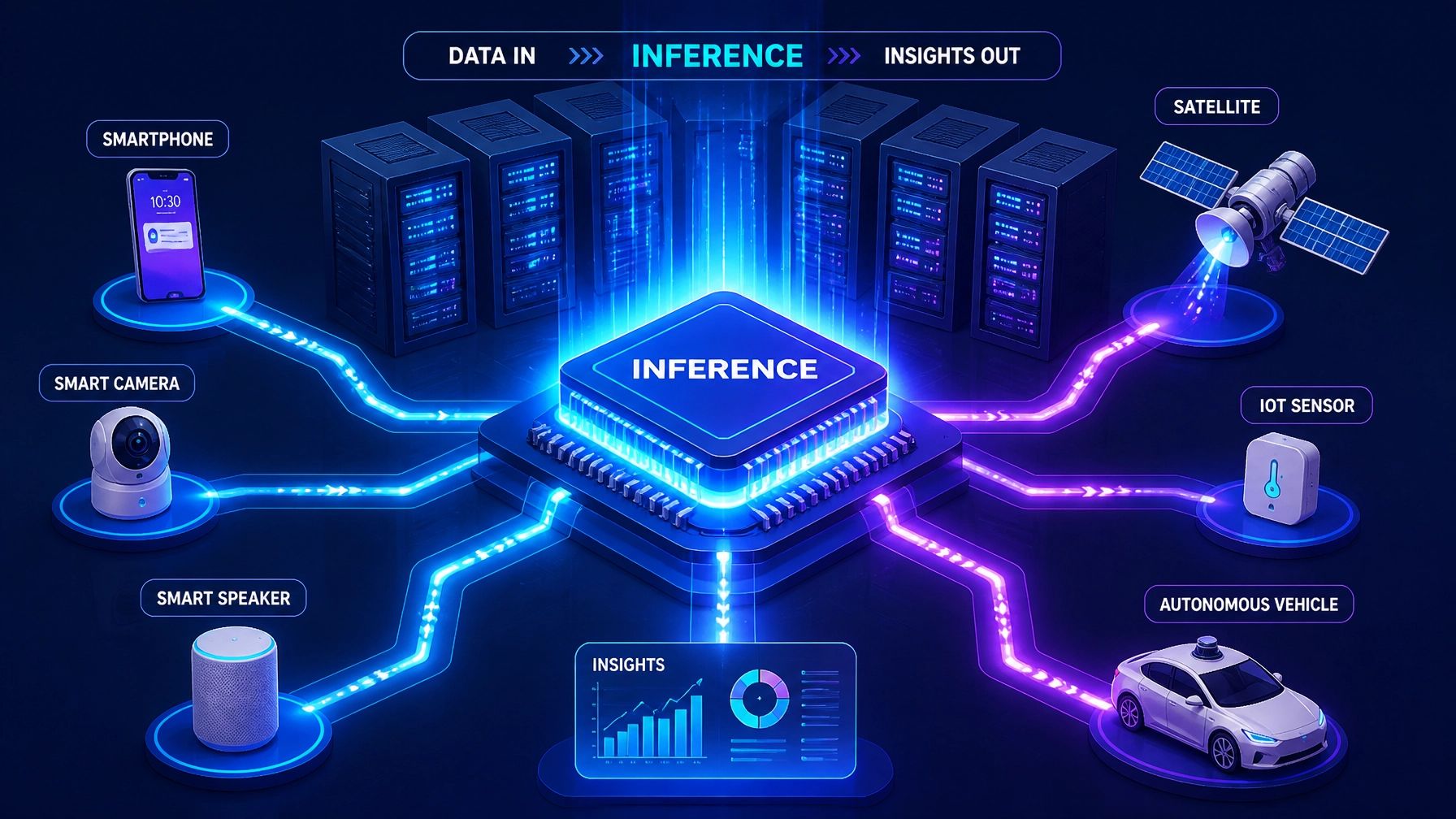
The growth of decentralized compute nodes is accelerating as more participants join the network. This trend highlights the shift from centralized to distributed AI infrastructure, offering a viable alternative to the bottlenecks of traditional cloud providers.
How decentralized inference markets cut costs
Centralized cloud providers operate on a scarcity model: they charge a premium for guaranteed availability and support. Decentralized inference markets flip this dynamic by aggregating idle consumer and enterprise GPUs into a single, liquid pool. This arbitrage of unused hardware removes the overhead of massive data center facilities, allowing networks to offer compute at a fraction of the cost of hyperscalers.
The cost advantage comes from two main mechanics. First, the market matches demand with the cheapest available supply in real-time. Second, by leveraging the public internet and consumer-grade hardware, these networks bypass the proprietary infrastructure fees that dominate traditional cloud pricing.
The following comparison illustrates the structural differences between centralized cloud inference and decentralized networks. While centralized providers offer enterprise-grade SLAs, decentralized markets prioritize cost efficiency and hardware accessibility.
| Feature | Centralized Cloud | Decentralized Network |
|---|---|---|
| Hardware Source | Proprietary Data Centers | Aggregated Consumer/Enterprise GPUs |
| Cost Model | Premium for Availability | Market-Driven Arbitrage |
| Latency Target | <10ms (Private Network) | ~100ms (Public Internet) |
| Overhead | High (Facility & Support) | Low (Peer-to-Peer) |
Networks like Prime Intellect are engineering stacks specifically to bridge the gap between these models. Their goal is to deliver the 100ms latencies required for practical public internet inference while maintaining the cost benefits of distributed hardware. This approach transforms idle consumer GPUs into a viable, high-throughput alternative for AI workloads.
Key players in decentralized inference markets
The shift toward decentralized inference markets is being driven by a cohort of protocols that have spent years building token-coordinated GPU networks. While the broader Web3 AI ecosystem is still maturing, these specific projects have moved beyond theory to deployable infrastructure that addresses the 2026 compute shortage.
Akash Network operates as a permissionless compute marketplace, leveraging its existing decentralized cloud infrastructure to offer GPU instances at a fraction of the cost of traditional hyperscalers. By allowing providers to bid for compute demand, Akash creates a liquid market for idle or underutilized hardware, making it a foundational layer for many inference workloads.
Render Network has evolved from its origins in GPU rendering for creative industries into a robust provider for AI inference. Its network aggregates GPU power from a global node provider community, offering scalable compute for neural network processing. Render’s focus on high-throughput tasks makes it a critical partner for developers needing reliable, distributed inference capacity.
Aethir focuses specifically on enterprise-grade distributed cloud computing, aiming to bridge the gap between consumer GPUs and professional AI requirements. By aggregating heterogeneous GPU resources, Aethir provides a scalable backend for large language model inference, ensuring low latency and high availability for demanding applications.
Prime Intellect distinguishes itself by engineering a distributed inference stack explicitly designed for consumer-grade GPUs. Their approach targets the public internet’s latency constraints, aiming for 100ms response times on standard hardware. This democratization of inference allows smaller nodes to participate meaningfully in the decentralized inference markets without requiring data-center-level equipment.
io.net and Nosana round out the major players by offering specialized token-economic models that align node operators with compute seekers. io.net aggregates a vast network of GPU providers, while Nosana focuses on efficient job distribution for AI tasks. Together, these protocols form the backbone of a decentralized alternative to centralized AI infrastructure.
Latency and reliability choices that change the plan
Decentralized inference markets face a fundamental tension: the public internet is inherently unstable, yet AI workloads demand consistency. Unlike centralized data centers with dedicated fiber and low latency, distributed networks must route requests through unpredictable nodes. This variability makes meeting strict Service Level Agreements (SLAs) significantly harder than in traditional cloud environments.
To address this, market protocols often implement multi-hop routing and redundancy checks. If a node fails to respond within a defined window, the request is automatically rerouted. While this ensures reliability, it adds computational overhead. The challenge lies in balancing these safety mechanisms against the need for speed, ensuring that the "decentralized inference markets" solution doesn't become too slow to be useful for real-time applications.
Frequently asked: what to check next
What is an example of a decentralized market?
Decentralized inference markets coordinate compute resources without a central authority. Projects like io.net, Akash, Render, Aethir, and Nosana have built token-coordinated networks that match GPU supply with AI demand. These platforms operate as open marketplaces where anyone can rent or sell computational power.
What is the AI inference market?
The AI inference market refers to the demand for running trained machine learning models to generate predictions. As AI applications scale, the need for low-latency, cost-effective inference grows. Decentralized inference markets address the 2026 compute shortage by distributing this workload across a global network of nodes rather than relying on centralized cloud providers.
What are decentralized marketplaces?
Decentralized marketplaces are digital platforms that use blockchain or distributed ledger technology to facilitate peer-to-peer transactions. They eliminate intermediaries by using smart contracts to enforce agreements. In the context of AI, these marketplaces allow users to access compute power directly from network participants, ensuring transparency and reducing costs.
What are some popular decentralized finance platforms?
While decentralized finance (DeFi) platforms like Uniswap and Aave focus on financial services, they share the same underlying technology as decentralized inference markets. Both rely on smart contracts and token incentives to coordinate resources. However, inference markets specifically target the computational needs of AI workloads, distinguishing them from traditional financial protocols.
No comments yet. Be the first to share your thoughts!