
The economics of AI inference demand
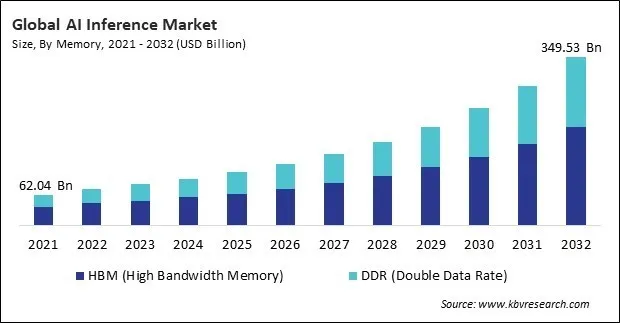
The market for AI inference is expanding at a pace that centralized cloud providers are struggling to match. Valued at approximately $103 billion in 2025, the sector is projected to reach $255 billion by 2030. This growth, driven largely by the rise of autonomous AI agents, represents a CAGR that far exceeds traditional enterprise software cycles. The bottleneck is no longer just about raw compute availability; it is about the economic efficiency of delivering low-latency predictions to millions of concurrent users.
Traditional cloud infrastructure, while robust, faces significant friction in this new era. Centralized hyperscalers operate on a model optimized for training workloads, where massive batch processing is the norm. Inference, however, requires real-time responsiveness. As demand spikes, the cost of maintaining idle capacity for peak loads creates a structural inefficiency. Providers must over-provision to handle sudden bursts, driving up costs that are ultimately passed to the end user. This dynamic creates a widening gap between the cost of compute and the willingness of the market to pay for it.
Decentralized inference markets emerge as a direct response to this economic pressure. By aggregating underutilized GPU capacity from a global network of independent nodes, these platforms can offer compute at a fraction of the cost of dedicated cloud instances. The technology shifts the paradigm from buying reserved capacity to renting idle cycles, effectively turning the entire internet's available hardware into a scalable inference engine. This model not only reduces costs but also increases resilience, distributing risk across thousands of nodes rather than relying on a handful of data centers.
The trajectory of this market is visible in the broader AI infrastructure landscape. The following chart illustrates the projected growth of the AI inference market size, highlighting the economic imperative that is driving developers and enterprises toward decentralized alternatives.
Key networks shaping the GPU sharing landscape
Decentralized inference is no longer a theoretical construct; it is an active market segment with distinct architectural models. The current landscape is dominated by two primary approaches: token-coordinated markets, which rely on blockchain incentives to manage supply, and peer-to-peer networks that prioritize latency and direct connectivity. Understanding the mechanics of these networks is essential for evaluating their viability in 2026.
The token-coordinated model has seen the most capital influx. Projects like io.net, Akash, and Render have built extensive markets where GPU owners are compensated via tokens. These platforms act as intermediaries, matching demand with supply through smart contracts. This model has scaled rapidly, creating deep liquidity for compute resources. However, the overhead of token settlement and the complexity of managing a multi-layered market introduce latency that can be prohibitive for real-time applications.
| Network | Architecture | Primary Focus |
|---|---|---|
| io.net / Akash | Token-Coordinated | Market liquidity and broad GPU aggregation |
| Petals / Primus | Peer-to-Peer | Low-latency inference via public internet routing |
| Nosana / Aethir | Hybrid/Cloud | Enterprise-grade reliability with decentralized nodes |
In contrast, peer-to-peer networks like Petals and Primus Network take a different approach. They do not rely on complex tokenomics to coordinate inference tasks. Instead, they route requests directly between users and idle GPU providers over the public internet. This architecture aims to minimize latency by bypassing centralized orchestrators. The trade-off is a reliance on the stability of individual connections and the geographic distribution of nodes, which can vary significantly based on user participation.
The economic reality of these networks hinges on the cost of inference versus centralized cloud providers. While decentralized options offer lower marginal costs for idle compute, they must overcome the "cold start" problem and ensure consistent uptime. The market is currently bifurcated: token-coordinated networks dominate bulk, non-real-time workloads, while peer-to-peer networks are gaining traction in latency-sensitive AI applications.
As the infrastructure matures, the distinction between these models may blur. Hybrid approaches are emerging, combining the liquidity of token markets with the speed of peer-to-peer routing. For developers and enterprises, the choice of network will depend on specific performance requirements and tolerance for the inherent variability of decentralized compute.
How GPU owners monetize idle compute
For providers, the economic case rests on converting stranded capital into liquid yield. Traditional cloud infrastructure operates on a capacity model where hardware sits idle during off-peak hours, representing a sunk cost. Decentralized inference markets flip this dynamic by enabling owners to lease unused GPU cycles—whether in data centers, enterprise offices, or home setups—to AI workloads that require massive parallel processing.
The value proposition is straightforward arbitrage. Providers list their hardware on platforms like io.net, Akash, or Render, which act as cryptoeconomic intermediaries. These networks coordinate demand from AI developers and match it with available supply. Instead of selling compute at a fixed, often premium, rate, providers earn variable yields based on real-time demand. This model allows GPU owners to recoup hardware depreciation faster than traditional leasing models permit.
Revenue streams typically follow two paths: direct token rewards or stablecoin payments. Token-based models align provider incentives with network growth but introduce volatility. Stablecoin payments offer predictable cash flow but may command lower rates due to the absence of speculative upside. The choice depends on the provider’s risk tolerance and their belief in the long-term utility of the underlying token.
To understand the market dynamics driving these yields, it helps to look at the broader crypto asset landscape. The performance of inference tokens often correlates with broader market trends, influencing provider revenue stability.
How decentralized inference solves the black box problem
Centralized AI inference operates like a sealed vault: data enters, a model processes it, and a result exits, with no way to verify the internal mechanics. This opacity creates compliance risks and limits auditability for high-stakes applications. Decentralized inference markets address this by shifting computation to verifiable environments where every step can be cryptographically proven.
The core mechanism relies on zero-knowledge proofs (ZKPs) or verifiable computation. When a node performs an inference task, it generates a cryptographic receipt that attests to the correct execution of the model weights on the provided input. This allows the client to verify the integrity of the result without needing to trust the specific hardware provider or re-run the expensive computation themselves.
This transparency extends to the data itself. Unlike centralized cloud providers that may ingest data into shared training pools, decentralized nodes often operate in secure enclaves or use homomorphic encryption techniques. This ensures that the inference is performed on private data without exposing the raw inputs to the network, effectively decoupling utility from surveillance.
The economic reality is that verification costs are rising as models grow larger. However, the value proposition for regulated industries—finance, healthcare, and legal—justifies the overhead. The ability to prove how a decision was made, not just what the decision was, is becoming a prerequisite for deploying AI in critical infrastructure.
Common questions about decentralized inference
Decentralized inference markets promise lower costs by aggregating idle GPU capacity, but they introduce distinct engineering trade-offs regarding reliability, latency, and security. Understanding these constraints is essential for determining suitability in high-stakes applications.
Is decentralized inference reliable enough for production?
Reliability in decentralized networks depends on dynamic node availability. Unlike centralized clouds that guarantee uptime through redundant infrastructure, decentralized systems must handle node churn and network instability. While protocols like Petals and Prime Intellect have demonstrated functional distributed inference, the lack of Service Level Agreements (SLAs) means availability is probabilistic rather than guaranteed. For critical workloads, this variability requires robust fallback mechanisms to centralized providers.
How does latency compare to centralized clouds?
Latency is the primary bottleneck for decentralized inference. Centralized data centers optimize for low-latency connections between tightly coupled servers, whereas decentralized networks route requests over the public internet. As noted by Prime Intellect, current distributed stacks aim for ~100ms latencies, which is significantly higher than the sub-10ms response times typical of specialized cloud GPUs. This latency gap makes decentralized inference suitable for batch processing or non-real-time tasks, but problematic for interactive applications requiring instantaneous feedback.
Are GPU providers secure and trustworthy?
Security risks in decentralized inference stem from the untrusted nature of participating nodes. Since inference tasks are distributed across unknown hardware, there is a risk of data leakage or malicious manipulation if the protocol does not employ cryptographic verification or secure enclaves. Most current decentralized inference models do not offer hardware-level isolation comparable to trusted execution environments (TEEs) found in enterprise cloud offerings. Users must assess whether their data sensitivity aligns with the trust model of the specific network.
No comments yet. Be the first to share your thoughts!