
The constraints of decentralized inference
Running large language models on a decentralized network introduces friction that cloud providers do not face. Centralized data centers optimize for throughput and latency using proprietary hardware clusters. Decentralized inference fragments this process across independent nodes, creating a tradeoff between cost efficiency and operational consistency.
The primary bottleneck is network latency. When a model is split across multiple machines, data must travel between nodes for every inference step. This adds milliseconds to response times, which becomes noticeable in real-time applications like chatbots or live translation. For batch processing or offline analysis, this delay is often acceptable. For interactive user experiences, the lag can degrade quality.
Data consistency presents another hurdle. In a centralized environment, the model weights are identical and synchronized across all servers. In a decentralized setup, nodes may hold slightly different versions of the model or struggle with synchronization during updates. This can lead to inconsistent outputs for the same prompt, requiring additional verification layers like VeriLLM to ensure reliability.
Despite these challenges, decentralized inference offers resilience. If one node fails, others can take over, preventing total service outages. This makes it attractive for critical infrastructure where uptime is more important than the lowest possible latency. The goal is not to replace cloud giants immediately, but to provide a viable alternative for specific use cases where cost and redundancy outweigh the need for instant response.
The market is currently testing these limits. Projects are experimenting with sharding techniques to reduce the data travel distance and improve speed. Until network speeds and node synchronization improve significantly, decentralized inference will remain a niche solution for high-volume, low-latency-insensitive tasks rather than a direct competitor to AWS or Azure for general-purpose AI hosting.
Decentralized inference choices that change the plan
Running AI models on distributed networks offers a path away from cloud monopolies, but it introduces distinct engineering constraints. The primary benefit is resilience and cost arbitrage: you tap into idle GPU capacity rather than paying premium spot prices. However, this comes at the expense of latency and predictability. Unlike a centralized API where you know the exact response time, a decentralized network must coordinate multiple nodes, verify outputs, and aggregate results. This adds overhead that can make real-time applications challenging.
When evaluating whether to shift your inference workload to a decentralized protocol, you need to look beyond just the price per token. You must weigh the reliability of the network against the complexity of your model. Large language models (LLMs) are particularly sensitive to fragmentation; splitting a 70B parameter model across nodes requires high-bandwidth communication between them, which can bottleneck performance. Smaller, quantized models often perform better in these distributed environments because they require less inter-node synchronization.
To help you decide if this architecture fits your specific use case, we have broken down the key metrics. The comparison below highlights the differences between traditional cloud inference and decentralized alternatives across cost, latency, and control.
The market data above reflects the broader crypto and tech sentiment driving these shifts. Ethereum’s price action often correlates with the adoption of decentralized compute networks, while NVIDIA’s chart reflects the underlying hardware demand. If your application requires sub-second latency and strict SLAs, centralized clouds remain the safer bet. However, for batch processing, fine-tuning, or privacy-sensitive tasks where data sovereignty is paramount, decentralized inference provides a compelling, albeit more complex, alternative.
How to Choose a Decentralized Inference Strategy
Decentralized inference splits model serving across independent nodes, creating a resilient alternative to centralized cloud providers. This approach reduces latency for edge users and lowers costs by leveraging idle GPU capacity. However, fragmentation and verification overhead can impact reliability. Use this framework to evaluate whether a decentralized compute market fits your deployment needs.
Map your user geography against node distribution. If your audience is global, decentralized networks can route requests to the nearest available GPU, reducing round-trip time. For low-latency trading or real-time applications, verify that the network guarantees consistent response times under load, as distributed nodes may introduce jitter compared to dedicated cloud instances.

Compare per-token pricing against major cloud providers. Decentralized markets often offer 30-50% savings by aggregating unused consumer and enterprise GPUs. Factor in overhead costs for model sharding and verification. If your workload is batch-oriented or non-critical, the savings justify the complexity. For high-stakes production workloads, the potential for node downtime may offset financial gains.

Ensure your LLM architecture supports sharding or quantization for distributed inference. Frameworks like VeriLLM enable publicly verifiable execution, which is critical for security-sensitive applications. Check if your model fits within the memory constraints of consumer-grade GPUs commonly found in decentralized pools. Large, dense models may require specialized high-end nodes, reducing the available pool and increasing costs.
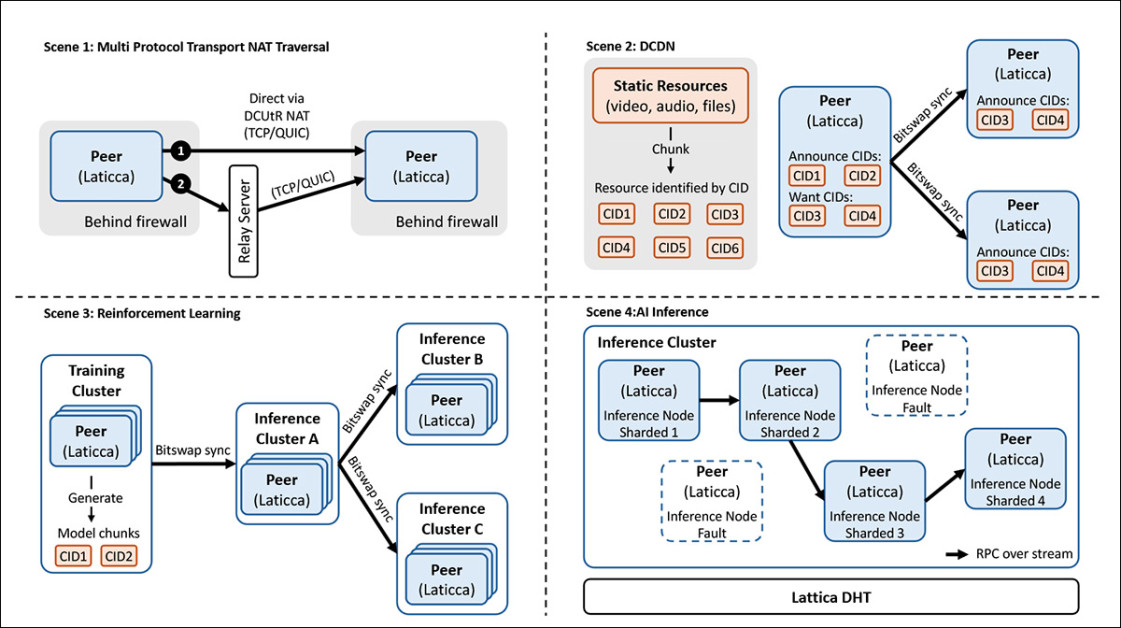
Decentralized inference introduces new attack vectors, including node manipulation and data leakage. Choose networks with cryptographic proof of execution, such as zero-knowledge proofs or secure enclaves. Review the network’s consensus mechanism and node reputation system. A robust trust layer ensures that the output you receive matches the computation performed, preventing malicious or faulty results.
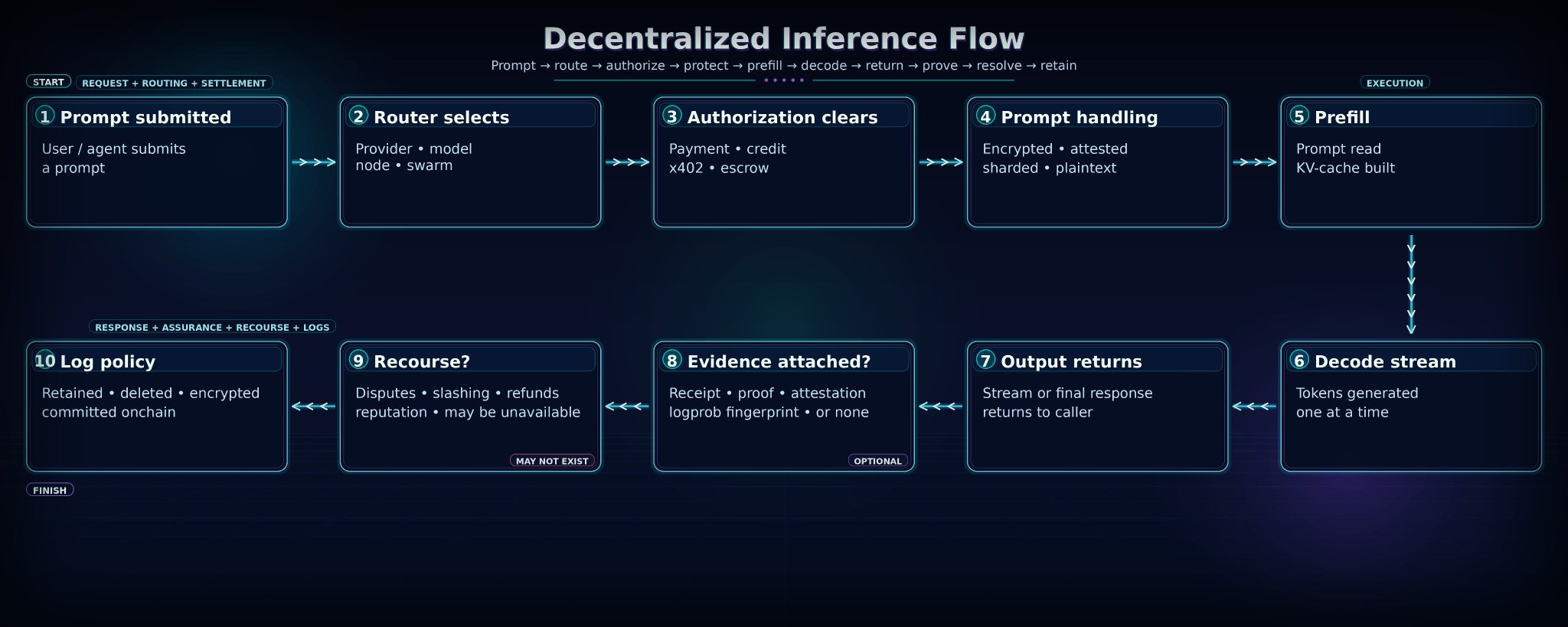
Start with a limited deployment for internal tools or non-user-facing tasks. Monitor performance metrics like throughput, error rates, and cost variance. Use this data to refine your node selection strategy and sharding parameters. Once stability is confirmed, gradually expand to production workloads, keeping a centralized fallback ready for critical failures.
Spotting Weak Decentralized Inference Options
The 2026 decentralized inference market is expanding, but not all compute providers deliver on their promises. Many platforms claim to offer "truly decentralized" AI, yet they rely on centralized aggregation layers that create single points of failure. Before committing resources, you need to verify the actual distribution of inference nodes and the integrity of the verification mechanism.
Common Mistakes in Decentralized AI Claims
Many projects tout decentralization while hiding critical bottlenecks. For example, some networks claim to distribute LLM inference across thousands of nodes, but the model weights are stored on a single centralized server. This defeats the purpose of resilience and censorship resistance. Another frequent issue is the lack of verifiable computation. Without cryptographic proofs that the correct model was executed, users cannot trust the output, especially for financial or legal applications.
How to Evaluate Decentralized AI Providers
- Check Node Distribution: Verify that inference nodes are geographically and organizationally diverse. A provider with 90% of its nodes in one data center is not decentralized.
- Verify Cryptographic Proofs: Ensure the platform uses zero-knowledge proofs or similar mechanisms to prove that the inference was performed correctly without revealing the model weights.
- Assess Redundancy: Look for fallback mechanisms if nodes go offline. True decentralization means the system remains operational even if a significant portion of the network fails.
- Review Economic Incentives: Understand how node operators are compensated. If the reward structure encourages collusion or centralization, the network is vulnerable to manipulation.
Why This Matters for Your Infrastructure
Choosing a weak decentralized inference option can lead to higher costs, slower response times, and security vulnerabilities. As the market matures, only platforms with robust decentralization and verifiable computation will survive. By focusing on these concrete checks, you can avoid the pitfalls and leverage the true benefits of decentralized AI compute.
Decentralized inference: what to check next
Decentralized inference shifts AI compute from centralized cloud giants to a distributed network of independent nodes. Instead of relying on a single provider like AWS or Google, your request is split across multiple machines. This approach reduces costs and increases resilience, but it introduces new technical trade-offs regarding latency and verification.
Below are the most common practical questions about how this technology works and where it stands today.
These distinctions matter because they separate the underlying blockchain consensus from the actual compute layer. Understanding where the model runs versus how it is paid for helps you evaluate the real benefits of decentralization in your specific use case.
No comments yet. Be the first to share your thoughts!