
Why decentralized inference matters in 2026
The center of gravity for artificial intelligence has shifted. In 2026, inference workloads account for roughly two-thirds of all AI compute, a significant jump from previous years [[src-serp-7]]. This surge is driven by the daily reality of running models, not just training them. As demand spikes, relying on centralized cloud providers becomes increasingly expensive and unreliable. Businesses and developers are turning to decentralized GPU networks to keep costs down and availability up.
Decentralized compute markets are expanding rapidly. New leases grew 27% quarter-on-quarter in Q1 2026, reaching over 43,500 contracts [[src-serp-5]]. This growth reflects a practical solution to the bottleneck of centralized infrastructure. By tapping into a global pool of idle or underutilized GPUs, inference tasks can be distributed more efficiently. This approach reduces latency for end-users and lowers the barrier to entry for smaller teams.
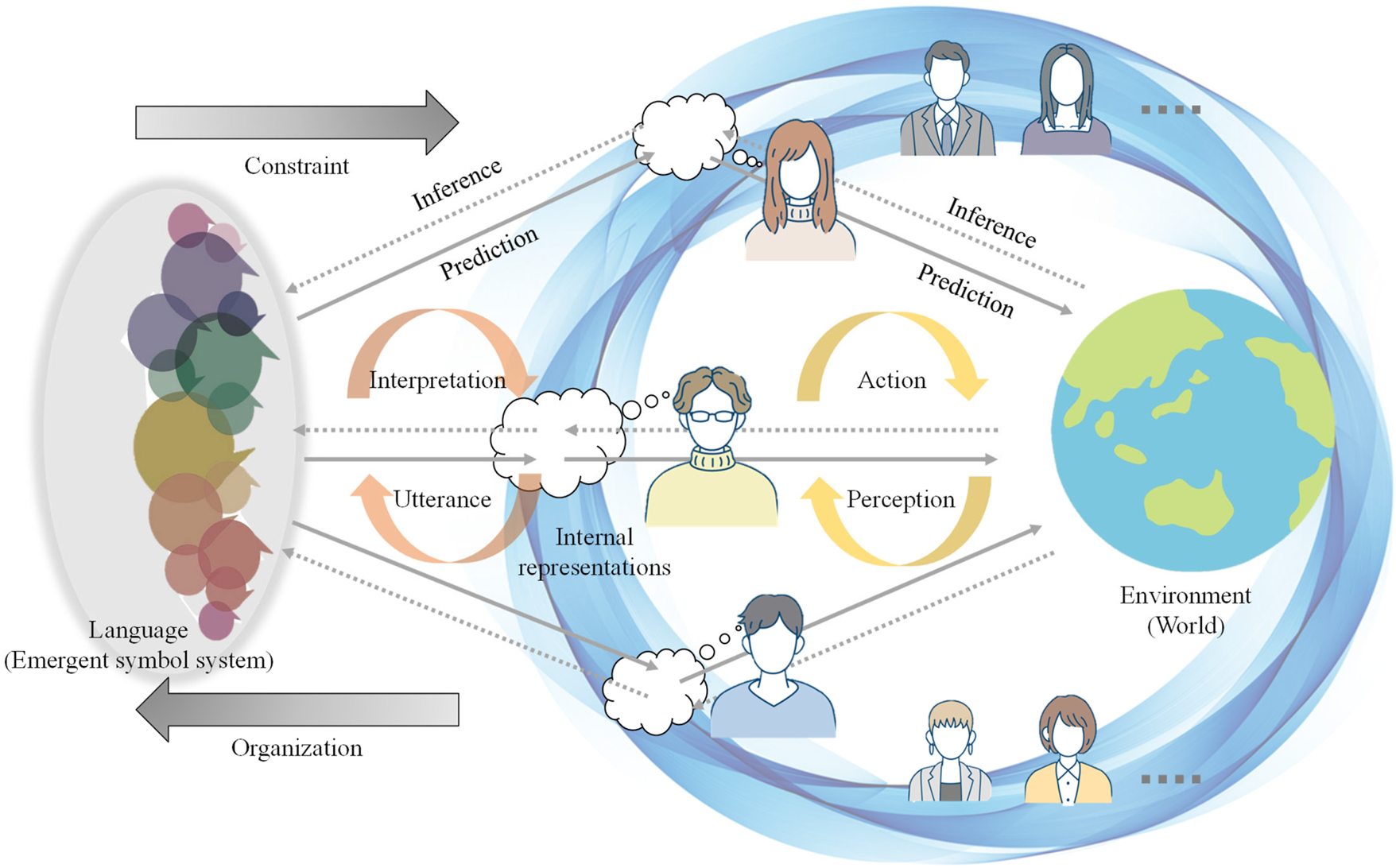
The visual representation of this shift mirrors biological systems. Just as decentralized networks distribute processing power, nature uses collective predictive coding to manage information efficiently [[src-serp-7]]. In AI, this means spreading the load across many nodes rather than concentrating it in a few massive data centers. The result is a more resilient infrastructure that can scale with demand without the single points of failure inherent in traditional cloud setups.
Choose the right decentralized GPU network
Picking a decentralized GPU network requires balancing three competing factors: cost, latency, and setup complexity. While platforms like Akash, Bittensor, and Vast.ai offer significant savings over centralized providers like AWS, they demand different levels of engineering effort to orchestrate.
The following comparison highlights the core trade-offs for each platform. Use this table to match your infrastructure constraints with the right network.
| Platform | Relative Cost | Latency Profile | Setup Complexity |
|---|---|---|---|
| Akash | Low | Variable | High |
| Bittensor | Low | High | Medium |
| Vast.ai | Medium | Low | Low |
Akash provides the lowest compute costs by leveraging a spot-market model, but this introduces variable latency and requires significant orchestration engineering. Bittensor offers a specialized inference layer with lower costs than AWS, but the network latency is higher due to the consensus mechanism. Vast.ai sits in the middle, offering near-centralized latency and ease of use at a moderate price point.
Before committing to a network, run through this checklist to ensure your deployment stack is ready for the chosen environment.
-
Verify GPU compatibility with the target network’s kernel requirements
-
Configure wallet and payment gateways for micro-transactions
-
Test latency tolerance with a small batch inference job
-
Set up monitoring for node uptime and reward distribution
If you are new to the technical setup, watching a walkthrough of a decentralized inference deployment can clarify the orchestration steps required for your specific choice.
Set up your inference environment
Provisioning a node for decentralized inference requires aligning hardware capabilities with the specific demands of the model you intend to serve. Unlike centralized cloud instances, edge nodes must balance memory bandwidth, VRAM capacity, and network latency to remain competitive in the inference market.
1. Select and provision the GPU instance
The foundation of your setup is the hardware. For most LLM inference tasks, you need a GPU with at least 24GB of VRAM to handle 7B-13B parameter models with quantization. Look for consumer-grade cards like the RTX 3090 or 4090, or enterprise options like the A100 if budget allows. Ensure your instance provider supports high-bandwidth networking, as decentralized inference relies on rapid data exchange between nodes.
2. Install the inference framework
Install a high-performance inference engine. vLLM is currently the industry standard for its PagedAttention mechanism, which maximizes memory efficiency. For lighter edge deployments, consider llama.cpp or Hugging Face Transformers with ONNX Runtime. Install these in a clean Python virtual environment to avoid dependency conflicts.
# Example installation for vLLM
pip install vllm

# Example installation for llama.cpp
make -j
3. Configure your network wallet
Decentralized inference networks require cryptographic identity. Generate a wallet address compatible with the specific network (e.g., Ethereum, Solana, or a dedicated L1). Secure your private keys in a hardware wallet or a secure enclave. This wallet will be used to receive payments for inference tasks and to sign proofs of service.
4. Download and verify the model
Download the model weights in the format supported by your framework (GGUF for llama.cpp, Safetensors for vLLM). Verify the SHA256 hash of the downloaded files to ensure integrity. Start with a quantized version (e.g., Q4_K_M) to reduce memory footprint without significant quality loss.
5. Connect to the network and deploy
Launch the inference server with your network configuration. This typically involves specifying the model path, GPU index, and network endpoint. Test the connection by sending a local request to ensure the model loads correctly. Once verified, register your node with the decentralized network's discovery service to begin receiving inference tasks.
Optimize for latency and cost
Balancing performance and expense in decentralized inference requires choosing the right trade-offs. You are not just selecting a model; you are configuring a network of independent nodes. The goal is to minimize the distance data travels while keeping the compute budget manageable.
Quantize the model
Start by reducing the precision of your model weights. Moving from FP16 to INT8 or even lower can cut memory usage by half without significantly degrading accuracy for most inference tasks. This reduction allows you to run larger models on cheaper, smaller nodes. If your application demands high precision, consider mixed-precision inference, keeping only the critical layers in higher precision.
Select nearby nodes
Latency is dictated by geography. Use a routing layer that prioritizes nodes physically close to the user or the data source. A node in the same region reduces round-trip time significantly compared to a distant server. While decentralized networks often span the globe, smart routing ensures that latency-sensitive requests are handled locally. This approach keeps the user experience snappy and reduces the load on long-haul network links.
Balance cost vs. engineering effort
Decentralized inference can beat AWS by ~30% on cost, but requires 3+ engineering days for orchestration.
By combining quantization with smart node selection, you create a system that is both fast and affordable. The key is to treat infrastructure as a dynamic resource, shifting workloads to where they are cheapest and fastest at any given moment.
Verify inference results on-chain
Decentralized nodes are untrusted by default. You cannot assume a node executed your model correctly just because it returned a prediction. Verification ensures the computation matches the published model weights and logic.
Use Zero-Knowledge Machine Learning (ZKML) proofs. A ZKML proof cryptographically demonstrates that the node ran the specific neural network on the input data without revealing the data itself. If the proof verifies against the on-chain smart contract, the result is accepted.
For lighter workloads, consider attestation-based verification. Nodes sign the output with a hardware-backed key (like an SGX enclave). While less mathematically rigorous than ZKML, it provides a trust boundary based on the hardware manufacturer. This is often sufficient for early-stage decentralized AI applications.
Always validate the proof generation time. ZKML proofs can be computationally expensive. Ensure the latency fits your use case before committing to on-chain settlement.
Frequently asked questions about decentralized inference
Is decentralized inference reliable for production workloads? Reliability depends on your tolerance for variance. While distributed nodes improve availability, they introduce network latency that can slow down real-time responses. For critical, low-latency tasks, centralized cloud providers currently offer more consistent performance. Decentralized inference is best suited for batch processing or applications where cost savings outweigh the need for instant throughput.
How does security compare to traditional cloud AI? Decentralized inference offers distinct security advantages through data privacy. By splitting model inference across multiple nodes, no single entity holds the complete dataset or model weights, reducing the risk of large-scale data breaches. However, this comes with increased complexity in verifying node integrity and preventing malicious actors from poisoning the inference chain.
Can I integrate decentralized inference with my existing AI stack? Integration is possible but often requires significant engineering effort. While platforms like Bittensor or Akash provide the infrastructure, connecting them to your current LLM pipelines typically demands custom orchestration. You may need to build middleware to handle node discovery, load balancing, and result aggregation, which can add days to your development cycle compared to standard API integrations.
Put The Boom into practice
No comments yet. Be the first to share your thoughts!