
Get decentralized inference markets right
Before you deploy workloads, you need to understand the tradeoffs. Decentralized inference flips the traditional cloud model by bringing computation closer to data rather than sending data to distant servers. This shift offers privacy benefits but introduces latency and complexity that centralized providers like AWS or Google Cloud do not have.
To avoid wasted spend or failed deployments, follow these checks:
- Match latency to workload: Real-time applications (e.g., interactive AI agents) often fail on decentralized networks due to node discovery delays. Batch processing tasks (e.g., training data preprocessing) are better suited for the asynchronous nature of these markets.
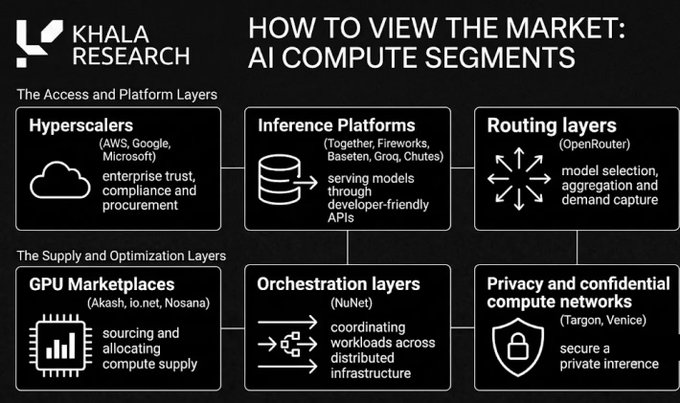
- Verify node reliability: Projects like io.net, Akash, Render, and Aethir use token-coordinated markets to aggregate GPU power. However, individual nodes can go offline. Always check the uptime history and reputation score of the specific node provider before committing.
- Calculate total cost of ownership: While spot prices are lower, you must account for data egress fees and the cost of orchestrating multiple nodes. A single centralized instance may still be cheaper for small, consistent workloads.
The goal is not to replace all cloud usage, but to use decentralized inference where cost savings outweigh the operational overhead.
Work through the steps
The to Decentralized Inference Markets works best as a clear sequence: define the constraint, compare the realistic options, test the tradeoff, and choose the path with the fewest hidden costs. That order keeps the advice usable instead of decorative. After each step, pause long enough to check whether the recommendation still fits the reader's actual situation. If it depends on perfect timing, unusual access, or a best-case budget, include a simpler fallback.
Common mistakes in decentralized inference
Running AI workloads on decentralized networks sounds like a cost-saving miracle, but the infrastructure is still maturing. Many projects promise global GPU access, yet the reality involves navigating fragmented liquidity, inconsistent hardware quality, and complex network topology. If you treat a decentralized inference market like a standard cloud provider, your models will fail or cost more than expected.
Ignoring hardware heterogeneity
Not all GPUs are created equal, even within the same model family. A decentralized network might aggregate thousands of nodes, but their VRAM capacity, CUDA core counts, and memory bandwidth can vary wildly. If your model requires specific precision (like FP16 or BF16) or a minimum memory footprint, assuming uniformity is a fatal error. You must check the node specifications for the specific compute provider you are targeting. Using a generic "GPU" filter will often route your inference to underpowered nodes that queue requests or fail silently.
Overlooking network latency and topology
Decentralized inference often involves routing data through multiple hops to reach the compute node. While this decentralizes storage and processing, it can introduce significant latency compared to a dedicated cloud instance in the same region. For real-time applications, this lag is unacceptable. If your use case requires sub-second response times, you need to verify the geographic proximity of the active nodes to your data source. Relying on a global pool without locality constraints will result in sluggish performance that defeats the purpose of inference.
Underestimating token volatility and fees
The cost advantage of decentralized inference is often tied to the native token price, which can fluctuate rapidly. Additionally, many networks charge fees in volatile assets while the underlying compute cost is denominated in stablecoins or USD equivalents. If you don't hedge against token price swings, your operational budget can explode overnight. Always calculate your effective cost in a stable currency, accounting for both the compute price and the network transaction fees, before committing to a provider.
Decentralized inference markets: what to check next
Before committing resources to these networks, it helps to separate the marketing hype from the actual mechanics. Decentralized inference markets are not just about cheaper compute; they are about permissionless access and data sovereignty.
Below are the most common practical questions readers ask when evaluating these platforms for 2026.
No comments yet. Be the first to share your thoughts!