
Get decentralized inference markets right
Before launching an application on-chain, you need to verify that the underlying compute network can actually handle your model’s demands. Decentralized inference relies on a patchwork of independent GPUs rather than a single data center. This architecture offers lower costs but introduces latency and consistency risks that centralized providers like AWS or Google Cloud do not have.
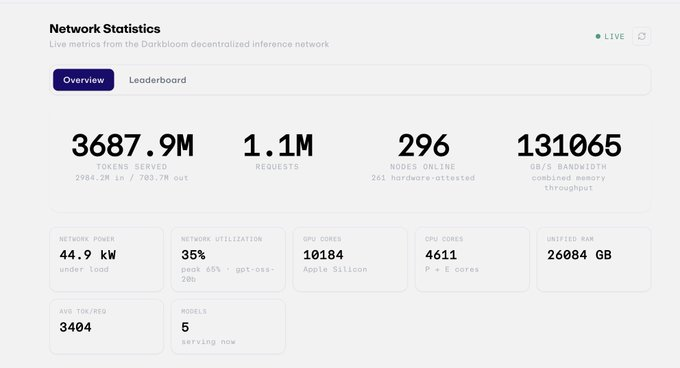
Start by auditing the network’s availability and latency guarantees. Not all nodes are equal. A network might advertise 10,000 GPUs, but if 80% are offline or throttled, your inference job will fail or timeout. Check the real-time uptime statistics of the specific project you are considering, such as io.net or Akash, rather than relying on their marketing claims. Look for networks that offer SLAs (Service Level Agreements) backed by smart contracts, which can auto-refund you if the compute fails to deliver.
Next, evaluate the model compatibility and software stack. Many decentralized networks struggle with large language models (LLMs) that require massive VRAM or specific CUDA versions. Ensure the network supports the exact framework (PyTorch, TensorFlow) and quantization format (GGUF, AWQ) your model uses. If your model requires proprietary optimizations, a decentralized market may not be ready for it yet. Test with a small, non-critical workload first to measure actual round-trip latency.
Finally, consider the economic tradeoffs. While decentralized inference is often cheaper, the token volatility of some networks can obscure true costs. Calculate your expected spend in stablecoins, not the native token, to avoid budget surprises. If your application requires high availability and low latency, a hybrid approach—using decentralized compute for batch jobs and centralized servers for real-time responses—might be the most practical solution.
Work through the steps
Deploying a model on a decentralized inference market requires a different workflow than using a centralized API like OpenAI. You are not just sending a prompt; you are sourcing compute from a distributed network of nodes. This process involves selecting a marketplace, preparing your model for off-chain execution, and verifying the output.
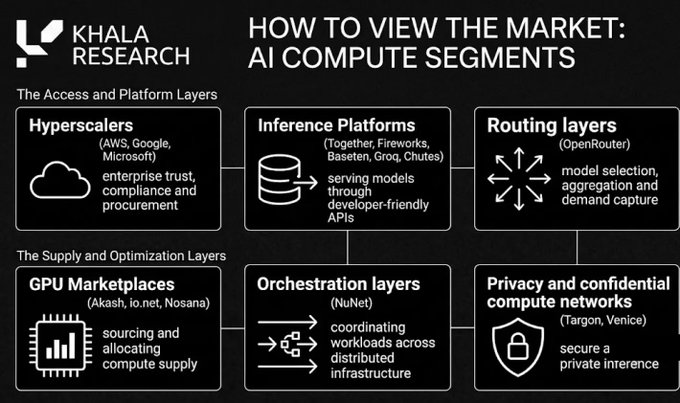
Start by selecting a platform that matches your latency and privacy needs. Projects like io.net, Akash, and Nosana operate token-coordinated markets where buyers and sellers connect directly. Compare their node reliability scores and pricing models. Some platforms prioritize low latency for real-time apps, while others offer cheaper rates for batch processing. Ensure the marketplace supports the specific framework your model uses, such as PyTorch or TensorFlow.
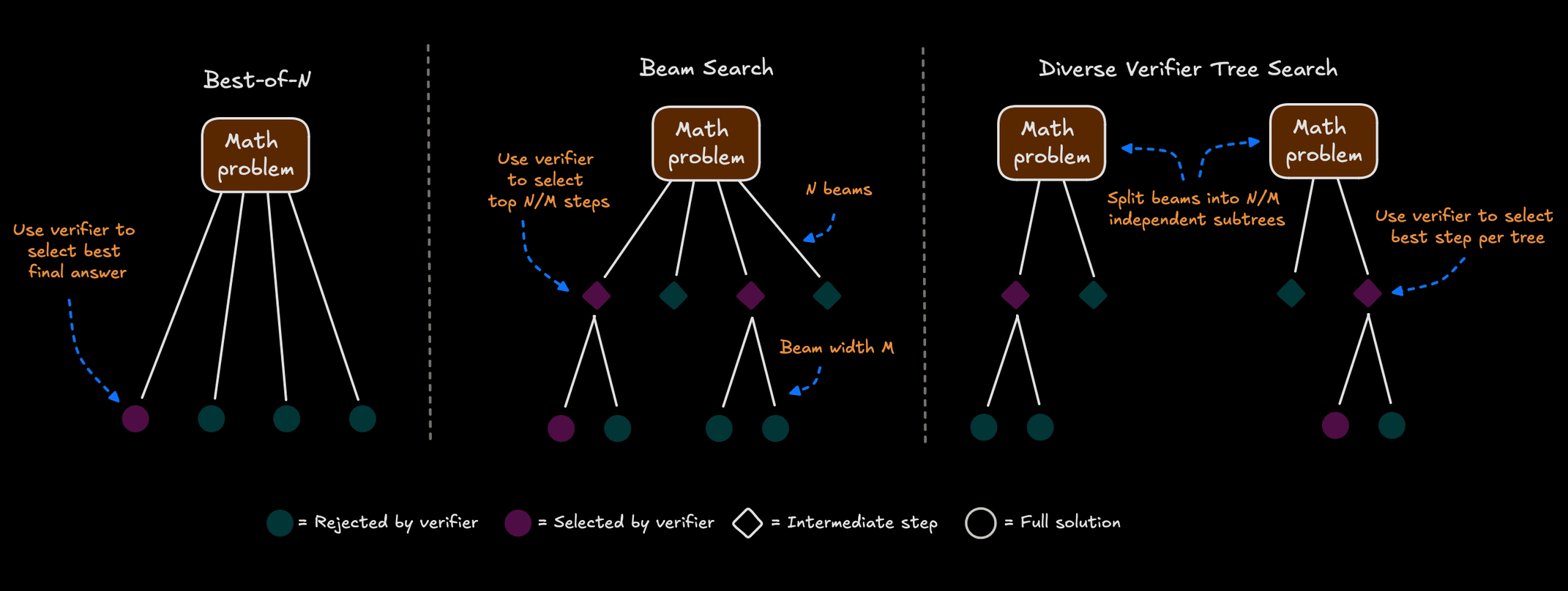
Centralized providers often handle optimization for you, but decentralized nodes require you to prepare the model yourself. Quantize your model to reduce memory footprint, as node hardware varies widely. A 100B+ model that barely fits on a single RTX 4090 may need to be sharded across multiple nodes or simplified for smaller GPUs. Verify that your model weights and inference code are packaged correctly to ensure compatibility with the node's environment.
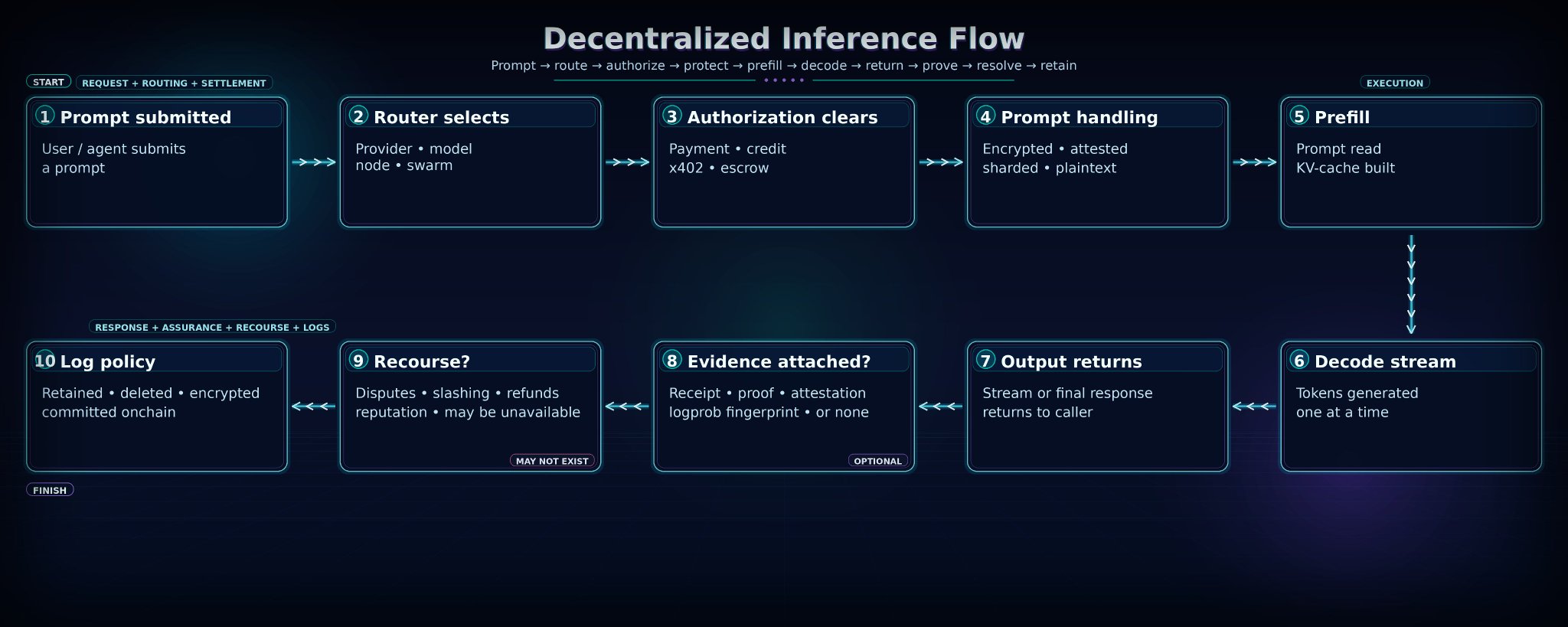
Connect your application to the marketplace’s API or SDK. Define your constraints, such as maximum price per token or required node location. The marketplace matches your request with available nodes. Unlike centralized APIs, you may experience variable latency as the network routes your request to the most suitable available hardware. Monitor the transaction to ensure the node accepts the job and begins processing.
Once the node completes the inference, it returns the result to your application. Verify the output against your expected format. The smart contract then automatically settles payment with the node provider. If the output fails verification, you can dispute the result and request a refund or re-execution. This on-chain verification is critical for maintaining trust in a permissionless network.
Fix common mistakes in decentralized inference
Running AI workloads on decentralized networks often fails because teams treat it like traditional cloud computing. The infrastructure behaves differently, and the same assumptions lead to different bottlenecks. Below are the most frequent errors and how to correct them.
Choosing the wrong network for your model size
Many teams try to run large language models (LLMs) on general-purpose compute aggregators that lack specialized hardware. While networks like io.net and Akash offer broad GPU access, they often rely on consumer-grade cards or fragmented clusters. This works for small, quantized models but fails for high-throughput inference.
The Fix: Match your model size to the hardware tier. For models under 7B parameters, general GPU networks are cost-effective. For larger models, seek out networks with dedicated H100 or A100 clusters, such as Aethir or Render, which provide the memory bandwidth required for serious inference tasks.
Ignoring latency and network overhead
Decentralized inference introduces hop latency. Your request travels from the user to the smart contract, then to the orchestrator, and finally to the worker node. If you don’t account for this, your application will feel sluggish compared to AWS or Google Cloud.
The Fix: Implement local caching and batch requests. Instead of sending individual tokens or small queries, group them where possible. Also, choose worker nodes geographically close to your user base if the network allows location-based filtering.
Overlooking model quantization needs
A common mistake is uploading unquantized models to decentralized nodes. This wastes bandwidth and increases storage costs unnecessarily. Most decentralized workers have limited VRAM, and large models simply won’t fit without aggressive quantization.
The Fix: Quantize your models to 4-bit or 8-bit formats before deployment. Tools like bitsandbytes or GGUF make this straightforward. This reduces the model footprint by up to 75%, allowing it to run on cheaper, more available hardware across the network.
Assuming token rewards equal real-world value
Some projects promise high token yields for providing compute, but these tokens may be illiquid or volatile. Relying on these rewards to offset costs can lead to unexpected losses if the token price drops.
The Fix: Calculate costs in stablecoins or USD terms. Treat token rewards as a bonus, not a primary revenue stream. Always check the liquidity depth of the network’s native token before committing significant resources.
Decentralized inference markets: frequently asked: what to check next
These answers address the practical distinctions between traditional AI infrastructure, decentralized compute networks, and broader crypto trends.
No comments yet. Be the first to share your thoughts!