
Market shift to edge compute
Use this section to make the Decentralized Inference decision easier to compare in real life, not just on paper. Start with the reader's actual constraint, then separate must-have requirements from details that are merely nice to have. A practical choice should survive normal use, maintenance, timing, and budget. If a recommendation only works in an ideal situation, call that out plainly and give the reader a fallback path.
The simplest way to use this section is to write down the must-have criteria first, then compare each option against those criteria before weighing nice-to-have features.
Verification tech stack
Decentralized inference cannot scale without a mechanism to verify that the output matches the input. In centralized systems, users trust the provider; in decentralized networks, the protocol must prove correctness. Three primary mechanisms have emerged to solve this trust gap: zero-knowledge machine learning (ZKML), optimistic fraud proofs, and cryptoeconomic incentives.
Zero-Knowledge Proofs
ZKML generates a mathematical proof that a specific neural network computation was executed correctly without revealing the underlying data or model weights. While computationally expensive, this approach offers the highest level of security. It is essential for high-stakes applications where data privacy and absolute correctness are non-negotiable, such as financial auditing or healthcare diagnostics. The overhead, however, often limits its use to smaller models or specific verification layers.
Optimistic Fraud Proofs
Optimistic verification assumes that inference is valid unless challenged. This method significantly reduces computational overhead by only requiring full verification when a dispute is raised. It mirrors the design of Optimistic Rollups in Layer 2 scaling. While faster and cheaper than ZKML, it introduces a time delay for finality, as challengers have a window to submit fraud proofs. This trade-off makes it suitable for applications where near-real-time results are acceptable.
Cryptoeconomic Incentives
The third approach relies on economic security rather than cryptographic complexity. Nodes stake assets to participate in inference tasks; if they submit incorrect results, their stake is slashed. This mechanism is the most cost-effective and scalable, enabling large-scale, real-time inference. However, it relies on the assumption that the cost of attacking the network exceeds the potential reward, making it less secure than cryptographic proofs for ultra-high-value transactions.
| Method | Verification Speed | Computational Overhead | Security Model |
|---|---|---|---|
| ZKML | Slow | High | Cryptographic |
| Optimistic | Medium | Low | Economic Challenge |
| Cryptoeconomic | Fast | Low | Stake Slashing |
Cost structures and pricing
Pricing in decentralized inference networks diverges sharply from traditional cloud provider models, which rely on centralized infrastructure amortization and premium SLA fees. Instead, decentralized pricing is driven by the spot-market dynamics of idle compute resources. This structure allows inference workloads to access GPU capacity at a fraction of the cost of major hyperscalers, as networks leverage underutilized hardware from individual nodes and smaller data centers.
The economic incentive is clear: by removing the overhead of proprietary hardware and centralized data centers, decentralized networks can offer inference rates that are often 50-80% lower than AWS or Azure equivalents for comparable model sizes. This arbitrage is the primary driver for enterprise adoption, particularly for high-volume, latency-tolerant tasks such as batch processing or fine-tuning validation.
To understand the current market baseline, it is useful to view inference tokens through the same lens as other crypto-asset compute markets. The volatility and pricing mechanisms of these tokens often correlate with broader network demand and hardware availability.
Network architecture models
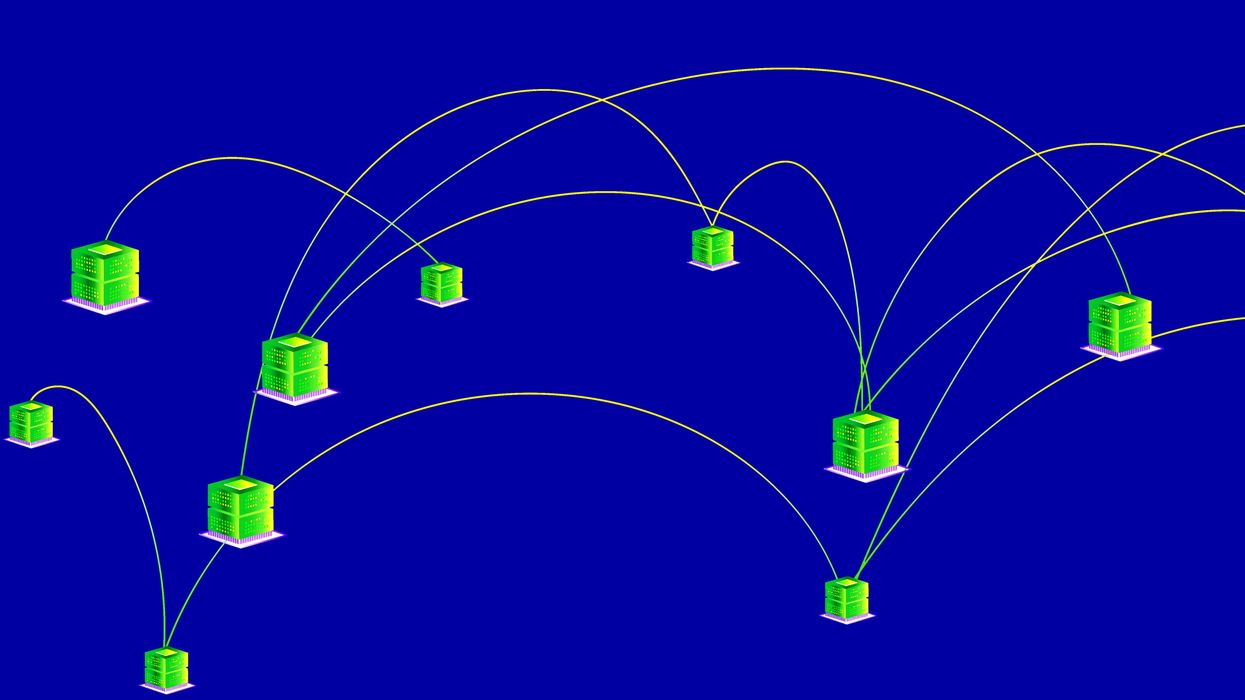
Decentralized inference relies on splitting computational workloads across distributed nodes rather than relying on centralized data centers. The primary architectural shift involves model sharding, where large language models are partitioned into smaller segments that individual GPUs or consumer devices can process. This approach reduces the barrier to entry, allowing participants with modest hardware to contribute meaningfully to the network.
Peer-to-peer distribution ensures that model weights and intermediate activations are transmitted efficiently between nodes. Projects like Wavefy Network exemplify this by creating systems powered by and for users, distributing the inference load across a decentralized mesh. This architecture minimizes latency and avoids the single points of failure inherent in traditional cloud-based AI services.
The economic incentives are tied directly to the technical feasibility of these architectures. By distributing compute, networks can offer inference services at a fraction of the cost of centralized providers. However, this requires robust consensus mechanisms to verify the correctness of computations without requiring full re-execution on every node. The trade-off between verification overhead and cost savings defines the current viability of these networks.
Adoption Barriers and Risks
Decentralized inference is transitioning from theoretical promise to market reality, yet significant technical and economic hurdles remain. The primary friction point is latency. Unlike centralized data centers with optimized hardware and direct network paths, decentralized networks must route requests across unpredictable peer-to-peer connections. For latency-sensitive applications like real-time translation or interactive gaming, the round-trip time required to gather and verify outputs from distributed nodes often exceeds acceptable thresholds.
Regulatory uncertainty further complicates deployment. As AI models become more capable, governments are increasingly scrutinizing the provenance of computational resources. It remains unclear how existing data sovereignty laws apply when training or inference data is split across nodes in multiple jurisdictions. This legal gray area creates risk for enterprises that cannot afford compliance violations or data leakage.
Integrating decentralized nodes into existing stacks adds another layer of complexity. Developers must build new abstraction layers to handle node discovery, incentive mechanisms, and result verification. This contrasts sharply with the plug-and-play nature of centralized APIs. The cognitive load and engineering time required to maintain these hybrid systems can outweigh the cost savings, especially for startups with limited engineering bandwidth.
Despite these challenges, the economic incentives for decentralized compute are strong. As illustrated by the performance metrics of major infrastructure tokens, the market is pricing in the long-term value of distributed resources. However, widespread adoption depends on solving the latency and verification bottlenecks without sacrificing the decentralized ethos.
Frequently asked: what to check next
Is decentralized AI the future of compute?
Decentralized AI infrastructure is positioned to reshape the market by enabling secure, scalable, and privacy-preserving systems. By distributing computational workloads across a network, it addresses critical challenges in security and cost that centralized clouds struggle to manage at scale [1]. This shift is not merely speculative; by the end of 2026, decentralized inference is expected to power a meaningful share of everyday AI, particularly in cost-sensitive or restricted environments [2].
How does blockchain verify AI inference?
Blockchain infrastructure provides the trust layer for decentralized AI through three main approaches: zero-knowledge proofs, optimistic fraud proofs, and cryptoeconomics. These methods allow nodes to verify that an AI model produced the correct output without revealing proprietary weights or raw data, adhering to the "don't trust, verify" principle [3]. This cryptographic assurance is what differentiates true decentralized inference from simple distributed computing.
What role do new blockchains play in AI?
The blockchain landscape in 2026 is moving beyond simple Layer 1 hype toward modular architecture, parallel execution, and specialized rollups. New networks are being built with AI infrastructure and developer-first tooling as core design principles, rather than as afterthoughts. This evolution supports the high-throughput, low-latency requirements of real-time AI inference, creating a more robust foundation for the decentralized compute market.
No comments yet. Be the first to share your thoughts!