
What decentralized inference actually is
Decentralized inference is a compute architecture that distributes large language model execution across a network of independent nodes rather than relying on a single cloud provider. Instead of hosting a model on one centralized server, the model is split into layers and processed across multiple GPUs in parallel. This approach, often called pipeline parallelism, creates a "swarm" of compute resources that collectively serve the model.
The primary advantage is cost reduction and increased accessibility. By aggregating unused or underutilized GPU capacity from various sources, decentralized networks can offer inference services at a fraction of the price of major cloud providers. However, this efficiency comes with significant technical complexity. You are no longer managing a single virtual machine; you are coordinating a distributed system where network latency, node reliability, and data consistency are critical failure points.
This shift from centralized to decentralized compute requires a different risk assessment. You are trading the predictable uptime and security guarantees of a provider like AWS or Google Cloud for a more resilient but less predictable infrastructure. Understanding this trade-off is essential before integrating decentralized inference into any production financial or operational workflow.
Choose your decentralized inference network
Selecting a platform for decentralized inference requires treating compute as a supply chain risk rather than a simple utility. The market currently lacks a dominant standard, meaning your choice dictates your exposure to latency spikes, model fragmentation, and verification failures. You must evaluate each network against three hard constraints: cost predictability, model availability, and cryptographic proof of execution.
Verify the verification method
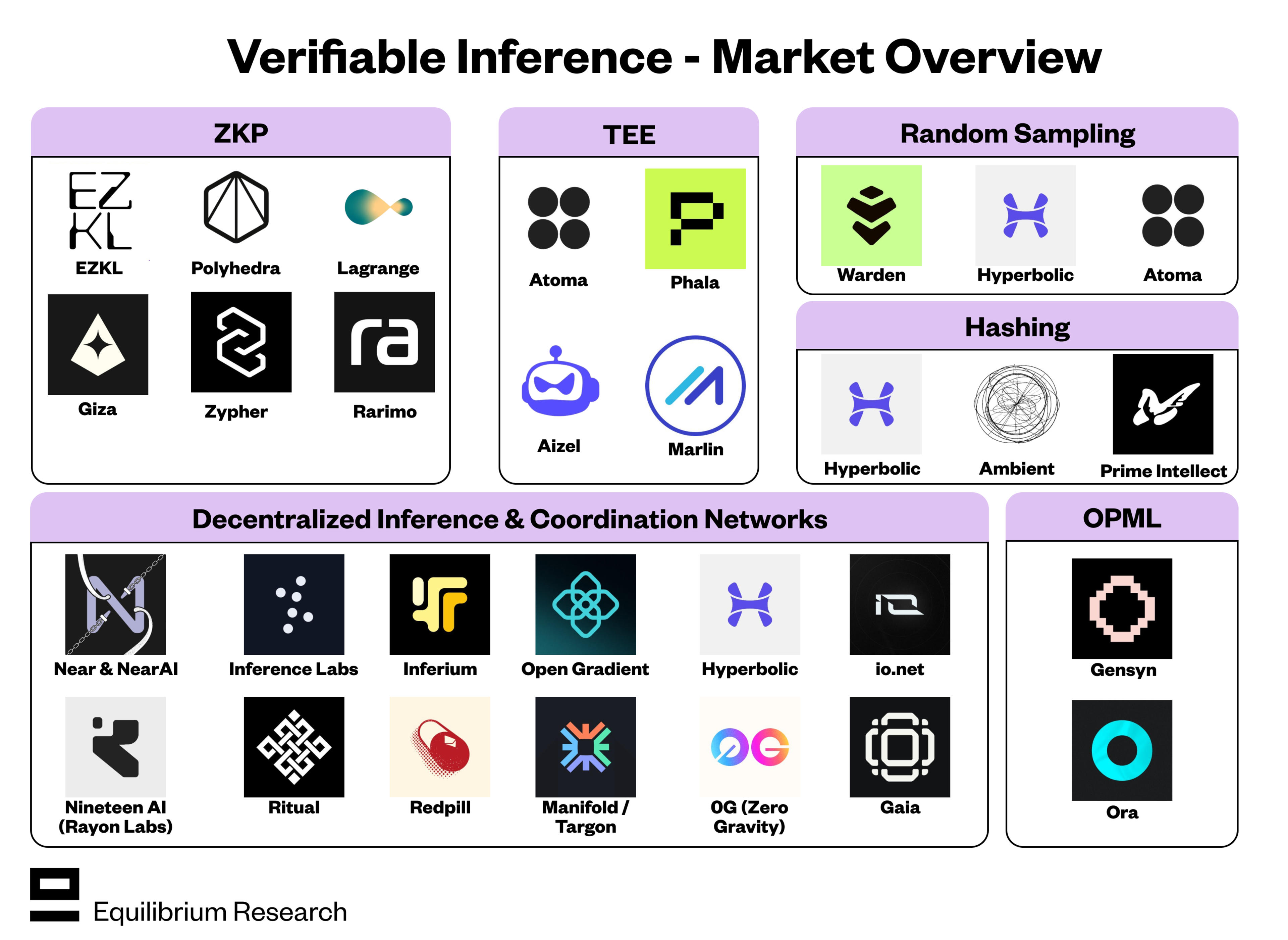
The primary risk in decentralized inference is not the cost of the GPU, but the integrity of the result. If the network cannot prove that the model executed correctly without re-running the entire computation, you are exposed to silent corruption. Prioritize networks that offer zero-knowledge proofs (ZKPs) or verifiable compute outputs. This adds overhead but ensures that the output you receive is mathematically identical to what the model should have produced. Without this layer, you are trusting a distributed network of anonymous nodes with your data and your logic.
Assess model fragmentation
Some networks split large language models (LLMs) across multiple nodes to reduce latency and cost. While this can lower prices, it introduces significant complexity. If a single node in the chain fails or returns an incorrect shard, the entire inference fails. For high-stakes applications, verify whether the platform supports full-model deployment on single nodes or if it relies on sharding. Sharding is useful for speculative tasks but introduces a single point of failure at the aggregation layer. Check the official documentation for how the network handles node dropout during active inference.
Compare cost and latency trade-offs
Decentralized compute is rarely cheaper than centralized cloud GPUs when you factor in the verification overhead and network latency. However, it offers resilience against provider lock-in and censorship resistance. Use the table below to compare the structural differences between leading platforms. Focus on the verification method column; this is the primary differentiator for risk mitigation.
| Network | Verification Method | Model Strategy | Best Use Case |
|---|---|---|---|
| Prime Intellect | Verifiable Compute (VPK) | Full model per node | High-integrity, low-latency tasks |
| Wavefy | Shard-based verification | Split LLM shards | Cost-sensitive, batch processing |
| Bittensor | Consensus-based | Diverse subnet models | Research, exploratory inference |
Check official source integrity
Before deploying any capital or sensitive data, audit the project’s codebase. Do not rely on third-party benchmarks. Review the GitHub repositories for recent commits and active maintenance. For Wavefy, examine the decentralized-llm-inference repository to understand how shards are reassembled. For Prime Intellect, review their inference architecture blog post to understand their approach to distributed engine design. Verify that the smart contracts governing the compute marketplace are audited and have a known history of stable operation.
Connect your wallet and fund the network
Accessing decentralized inference requires bridging traditional finance with Web3 infrastructure. This process introduces distinct risks: smart contract vulnerabilities, network congestion, and the irreversible nature of blockchain transactions. Proceed with verification at every stage. Do not rush the funding process. A single error in the transaction details can result in permanent loss of funds.
Verify your wallet and network
Before initiating any transaction, ensure your wallet software (such as MetaMask or Rabby) is updated to the latest version. Outdated software may lack critical security patches or fail to recognize newer token standards. Confirm you are connected to the correct network—typically the mainnet for the specific inference protocol you are using. Test the connection by checking your balance. If the balance does not reflect your holdings, disconnect and reconnect to refresh the RPC endpoint.
Acquire the necessary tokens
You will need the native token or stablecoin required by the inference protocol. Purchase these assets from a reputable exchange. Transfer them to your wallet address carefully. Always send a small test amount first. Verify that the tokens arrive correctly before committing significant capital. Check the token contract address against official documentation to avoid phishing scams that mimic legitimate tokens.
Account for gas fees
Blockchain transactions require gas fees, which compensate validators for processing your request. These fees fluctuate based on network demand. During high-traffic periods, costs can spike unexpectedly. Check the current gas price using a block explorer or wallet interface. Ensure your wallet holds enough native currency (e.g., ETH, MATIC) to cover the gas fee in addition to the inference cost. Insufficient gas will cause the transaction to fail, potentially leaving you with partial losses.
Execute the funding transaction
Initiate the transfer from your exchange or external wallet to your inference wallet. Double-check the recipient address character by character. Blockchain transactions are immutable; there is no "undo" button. Once confirmed, the funds are available for staking or paying for inference tasks. Record the transaction hash (TXID) for your records. This hash serves as proof of payment and allows you to track the status on a block explorer if issues arise.
Submit your inference request
Submitting a request to a decentralized network requires a fundamental shift in how you structure data. Unlike standard API calls where you interact with a single, centralized endpoint, decentralized inference distributes the compute load across a mesh of nodes. This architecture introduces latency variability and verification overhead that centralized providers do not. You must format your payload to include not just the prompt, but the specific parameters that allow the network to route and verify the computation.
1. Format the JSON Payload
Your request must adhere to a strict JSON schema. The payload includes the prompt (the input text or image data), the model_id (identifying the specific neural network weights), and parameters such as temperature and max_tokens. Crucially, you must include a proof_type field. This tells the network how the nodes should validate their output—whether through zero-knowledge proofs, consensus, or simple hash verification. Omitting this field often results in the request being rejected or routed to unverified nodes, increasing the risk of adversarial manipulation.
{
  "model_id": "llama-3-8b-v1",
  "prompt": "Analyze the risk profile of asset X...",
  "parameters": {
    "temperature": 0.2,
    "max_tokens": 150,
    "proof_type": "zk-proof"
  }
}
2. Select Verification Parameters
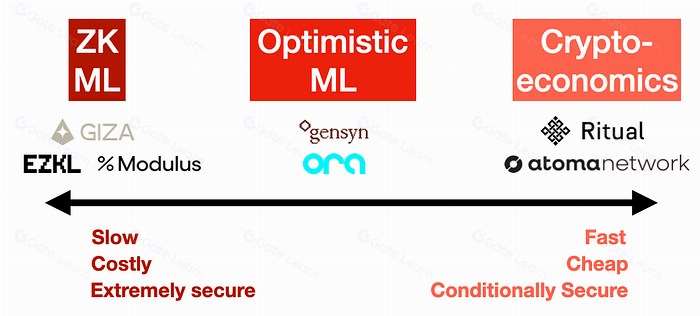
In high-stakes finance, speed is secondary to accuracy. When selecting your proof_type, you are making a trade-off between cost and certainty. ZK-proofs (Zero-Knowledge) provide the highest level of cryptographic assurance but incur higher gas fees and longer submission times. Consensus-based verification is faster but relies on the majority of nodes agreeing, which can be vulnerable if a minority of nodes are compromised. For sensitive financial modeling, always prioritize zk-proof or multi-party-computation over simple hash checks. Verify these settings against the PrimeIntellect documentation for current network standards.
3. Submit and Monitor the Request
Once the payload is signed and submitted to the gateway, you receive a transaction hash or request ID. Do not assume immediate completion. Decentralized inference is asynchronous. You must monitor the request status using the provided ID. The network will return a status field: pending, verifying, or completed. If the status remains pending for an extended period, it may indicate a lack of available compute capacity or a network congestion event. In such cases, you may need to adjust your max_fee to incentivize faster node selection.
4. Verify the Output
Upon receiving the response, do not blindly trust the content. Verify the cryptographic proof attached to the output. If you requested zk-proof, validate the proof against the public verification key. This step is non-negotiable for financial applications. If the proof fails validation, discard the result and retry with a different node set or a higher proof threshold. This verification step is what separates decentralized inference from standard cloud APIs, ensuring that the compute was performed correctly without relying on a single provider's integrity.
Structure your request with model_id, prompt, and parameters. Always include a proof_type to define the verification standard.
Choose zk-proof for high-stakes accuracy or consensus for speed. Higher proof standards increase cost but reduce adversarial risk.
Submit the signed payload and track the request ID. Watch for pending states that may require fee adjustments during congestion.
Validate the cryptographic proof against the public key. Discard any result that fails verification and retry with a different node set.
Verify the computation results
In decentralized inference, speed is secondary to accuracy. You must confirm that distributed nodes executed the model correctly and did not return fabricated outputs. Relying on unverified nodes introduces unacceptable risk for financial or high-stakes applications. Verification acts as the final audit gate, ensuring the integrity of the AI's decision.
The primary mechanism for this verification is zero-knowledge proofs (ZKPs). Systems like VeriLLM provide lightweight frameworks for publicly verifiable inference. These proofs allow you to validate that the computation was performed correctly without re-running the entire expensive process. This approach balances security with the efficiency required for distributed systems.
If ZKPs are not feasible due to computational overhead, fallback to consensus mechanisms. This involves aggregating results from multiple independent nodes. The final output is accepted only if a majority of nodes agree on the result. This method mitigates the risk of single-node failure or malicious intent, though it requires more nodes to maintain trust.
Review the cryptographic signatures attached to each node's output. Ensure they match the expected model weights and input hashes. Any discrepancy in the proof or signature indicates a potential failure or attack vector. Do not proceed with downstream tasks until these checks pass.
Troubleshoot High Latency and Node Failures
Decentralized inference introduces variables that centralized cloud providers do not. Network jitter, node unreliability, and verification overhead can degrade performance unpredictably. When latency spikes or responses fail, treat the issue as a risk management problem rather than a simple connectivity error.
Verify Node Availability and Health
Before adjusting request parameters, confirm the nodes you are querying are actually online and healthy. Use the provider’s health check endpoints or dashboard to verify node status. If a node is reporting high load or offline status, reroute your request immediately. Do not wait for timeouts to expire; proactive routing reduces failure rates.
Check Network Latency and Timeout Settings
Public internet connections introduce inherent latency. If your timeout settings are too aggressive, you will drop valid requests. Increase your timeout threshold to accommodate network variability, but set a hard limit to prevent infinite hangs. Monitor round-trip times (RTT) to identify if specific regions or providers are causing bottlenecks.
Validate Verification and Security Checks
Decentralized inference relies on cryptographic proofs to ensure computation integrity. If verification fails, the node will reject the result. Ensure your client is correctly configured to accept the proof format required by the node. Mismatched verification protocols are a common cause of silent failures. Review the official documentation for your specific inference engine to confirm compatibility.
Pre-flight Checklist
-
Verify node health status via dashboard or API
-
Confirm network latency is within acceptable thresholds
-
Check timeout settings against network variability
-
Validate cryptographic proof format compatibility
-
Monitor node load and reroute if necessary
Frequently asked: what to check next
Decentralized inference splits large language models across multiple nodes rather than relying on a single provider. This architecture aims to reduce costs and increase resilience, but it introduces new verification challenges that require careful due diligence.
No comments yet. Be the first to share your thoughts!