

Get decentralized inference right
Start to Decentralized Inference Markets with the constraint that matters most in real life: space, timing, budget, skill level, maintenance, or availability. That first constraint should shape the rest of the plan instead of appearing as an afterthought. Keep the first pass simple enough to verify. Compare the main options against the same criteria, remove choices that only work in ideal conditions, and save optional upgrades for later.
The simplest way to use this section is to write down the real constraint first, compare each option against it, and choose the path that still works outside ideal conditions.
Work through the steps
to Decentralized Inference Markets works best as a clear sequence: define the constraint, compare the realistic options, test the tradeoff, and choose the path with the fewest hidden costs. That order keeps the advice usable instead of decorative. After each step, pause long enough to check whether the recommendation still fits the reader's actual situation. If it depends on perfect timing, unusual access, or a best-case budget, include a simpler fallback.
Fix common mistakes
Decentralized inference markets promise lower costs and censorship resistance, but the gap between theory and practice is where most projects fail. The architecture is fragile because it relies on coordinating many independent nodes to produce a single, coherent output. When the underlying assumptions about hardware reliability or network latency are wrong, the entire inference chain breaks.
Ignoring data sharding overhead
Sharding large language models across multiple GPUs introduces significant communication overhead. Many implementations assume high-speed interconnects that do not exist in public, decentralized networks. The result is that inference latency often exceeds centralized cloud providers, negating the cost benefit. Always benchmark end-to-end token generation speed, not just raw FLOPS per node.
Underestimating node reliability
A decentralized network is only as strong as its weakest node. If a provider drops out mid-inference, the system must either retry the entire process or reconstruct the output from partial shards. This redundancy penalty can double or triple the effective cost. Implement strict staking requirements and slashing conditions to ensure providers stay online during active requests.
Overlooking incentive alignment
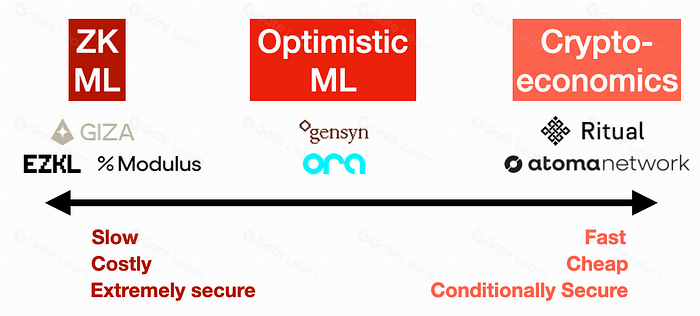
Most early models rely on simple payment-for-compute structures that do not account for quality verification. Without a robust oracle system to verify the correctness of the output, providers have an incentive to rush computations or return cached results. Use zero-knowledge proofs or multi-party computation to verify that the computation was performed correctly before releasing payment.
Decentralized inference: what to check next
Before committing to a decentralized inference market, it helps to separate the underlying technology from the specific blockchain it runs on. Many readers confuse the compute layer with the settlement layer, leading to questions about whether assets like XRP or Ethereum are "actually" decentralized.
The reality is that decentralization exists on a spectrum. A network might be highly decentralized in its compute distribution but centralized in its governance or data availability. Understanding this distinction is critical for evaluating the reliability and censorship resistance of any inference provider.
Here are the most common practical questions about how decentralized AI works and where the tradeoffs lie.
No comments yet. Be the first to share your thoughts!