
Why inference costs are breaking centralized clouds
Decentralized inference networks offer a cost-effective alternative to centralized clouds by aggregating idle GPU capacity. However, this model introduces significant technical trade-offs regarding latency and reliability that enterprises must weigh against potential savings.
How decentralized inference networks operate
Decentralized inference markets function by matching AI requesters with a distributed pool of GPU providers. This architecture flips the traditional centralized model: instead of sending data to distant, proprietary servers, the inference workload is routed to available compute resources. Projects such as io.net, Akash, Render, Aethir, and Nosana have established token-coordinated markets that aggregate these idle or dedicated resources into a usable utility layer for developers.
The core mechanism relies on economic incentives and cryptographic verification to ensure reliability. When a requester submits a task, the network matches it to a provider based on cost, proximity, and available capacity. Token staking acts as a bond; providers stake assets to guarantee uptime and correct output, with slashing penalties applied for failures. This creates a self-regulating market where price discovery happens in real-time, often undercutting centralized cloud giants by leveraging underutilized consumer and enterprise hardware.
Latency and data privacy remain the primary technical trade-offs. While the public internet introduces variable network hops, networks like Prime Intellect are engineering stacks specifically optimized for consumer GPUs to target the 100ms latency thresholds required for real-time applications. Data privacy is enhanced because inference can occur closer to the data source or within encrypted enclaves, reducing the exposure of sensitive information to a single monolithic provider.
Network Comparison
The following table compares key decentralized inference networks on critical performance and economic metrics.
Real-time pricing beats fixed fiat models
Decentralized inference markets operate on a fundamentally different economic engine than traditional cloud providers. While SaaS contracts lock you into fixed fiat rates, networks like io.net and Akash use native tokens—such as IO, AKT, and RNDR—to price compute. This dynamic model ties the cost of inference directly to real-time supply and demand, allowing you to capture significant savings during periods of market volatility or network idle time.
The economic advantage lies in the transparency of this pricing mechanism. According to control theoretic research on decentralized AI economies, the reliance on fluctuating token values creates a self-correcting market where compute availability is priced against actual network load rather than arbitrary vendor margins [1]. When demand spikes, prices adjust upward to attract more providers; when demand falls, prices drop, benefiting inference workloads that can tolerate slight latency variations.
However, this model introduces a new variable: token volatility. A drop in the value of the network’s native token can effectively lower your compute costs, but it can also signal broader market instability that might affect provider reliability. To manage this risk, many enterprises now use stablecoin-denominated contracts or hedging strategies to lock in predictable inference costs while still leveraging the underlying efficiency of decentralized hardware. This hybrid approach allows organizations to benefit from the lower baseline costs of decentralized inference without exposing their budgets to the wild swings of crypto markets.
To understand the current cost landscape, it helps to look at the live value of the primary tokens used in these markets. The price of tokens like AKT or RNDR directly influences the final invoice for inference tasks, making real-time data essential for accurate budgeting.
Latency and reliability trade-offs to watch
The promise of decentralized inference markets rests on economics, but the bottleneck remains network physics. Consumer-grade GPUs offer significant cost advantages over enterprise data centers, yet they introduce variable latency and reliability risks that centralized providers do not face. For applications requiring consistent, sub-100ms response times, the public internet introduces a fundamental constraint that protocol-level optimizations alone cannot fully erase.
Providers like io.net and Akash aggregate vast pools of idle consumer hardware, creating a dense marketplace for compute. However, this density comes with inherent instability. Consumer GPUs may throttle due to thermal constraints, suffer from intermittent internet connectivity, or be repurposed by their owners mid-task. Unlike dedicated data center nodes, these resources are not guaranteed for long-running, stateful inference jobs. The network must constantly re-route traffic to find available nodes, adding overhead that accumulates in high-volume scenarios.
High-stakes applications requiring sub-10ms latency may still require hybrid approaches combining centralized and decentralized resources. Purely decentralized routes often struggle to meet the strict Service Level Agreements (SLAs) required for real-time interactive AI.
Research into distributed inference engines highlights this tension. Prime Intellect, for instance, has engineered stacks specifically targeting the 100ms latency ceiling of the public internet for consumer GPUs. This suggests that while 100ms may be acceptable for batch processing or non-interactive tasks, it is a hard limit for conversational AI or real-time gaming. As models grow larger, the need to shard inference across multiple nodes amplifies this network latency, turning a single millisecond delay into a compounded user experience friction.
The trade-off is essentially a choice between cost efficiency and predictability. Decentralized markets excel at absorbing bursty, non-urgent workloads where saving 80% on compute is worth the risk of occasional delays. For latency-sensitive production environments, however, the "best-effort" nature of consumer hardware remains a significant hurdle. Until network protocols can guarantee deterministic routing over the public internet, centralized data centers will retain their dominance for mission-critical, low-latency inference tasks.
Key questions about decentralized inference
The shift toward decentralized inference is often obscured by broad terminology. To understand the 2026 cost shift, we must distinguish between general decentralized marketplaces and the specific mechanics of AI inference networks.
What is the inference market?
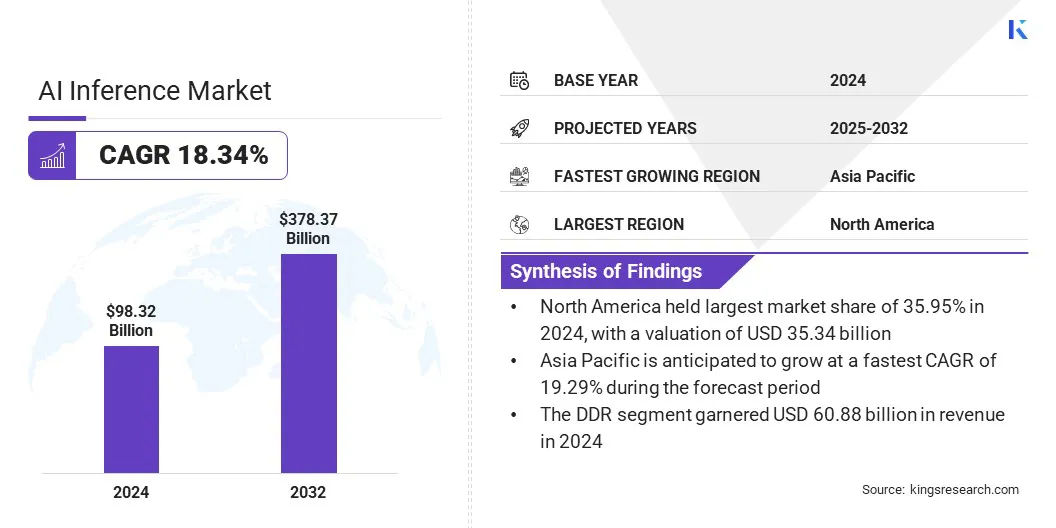
The inference market refers to the demand for computational power to run trained AI models on user data. Unlike training, which is capital-intensive and infrequent, inference is continuous and scales with usage. Decentralized inference networks use cryptoeconomic frameworks to mediate these processes through tokens, matching idle GPU supply with immediate demand. This structure aims to lower costs by bypassing the premium pricing of centralized cloud providers.
What are decentralized marketplaces?
Decentralized marketplaces are peer-to-peer platforms where transactions occur without a central intermediary. In the context of AI, these platforms aggregate distributed computing resources. Providers list available GPU capacity, and users submit inference requests. The network uses smart contracts to handle payment and verification, ensuring that providers are compensated only when tasks are completed correctly. This model increases transparency and reduces single points of failure.
What is an example of a decentralized market?
Akash Network and io.net are primary examples of decentralized inference markets. Akash operates as a decentralized cloud platform, allowing users to deploy containers on a global network of servers. io.net specifically focuses on AI inference, connecting GPU owners with AI developers. These platforms demonstrate how decentralized infrastructure can scale to meet the growing computational needs of the AI industry, offering competitive pricing and flexibility.
No comments yet. Be the first to share your thoughts!